Discovery
Travelling during Ramadan in Morocco is an intense experience. Tourist sites are deserted, and the streets, almost empty during the day, come alive at dusk. Behind the windows, you can smell the harira and hear the conversations of families gathered to break the fast.
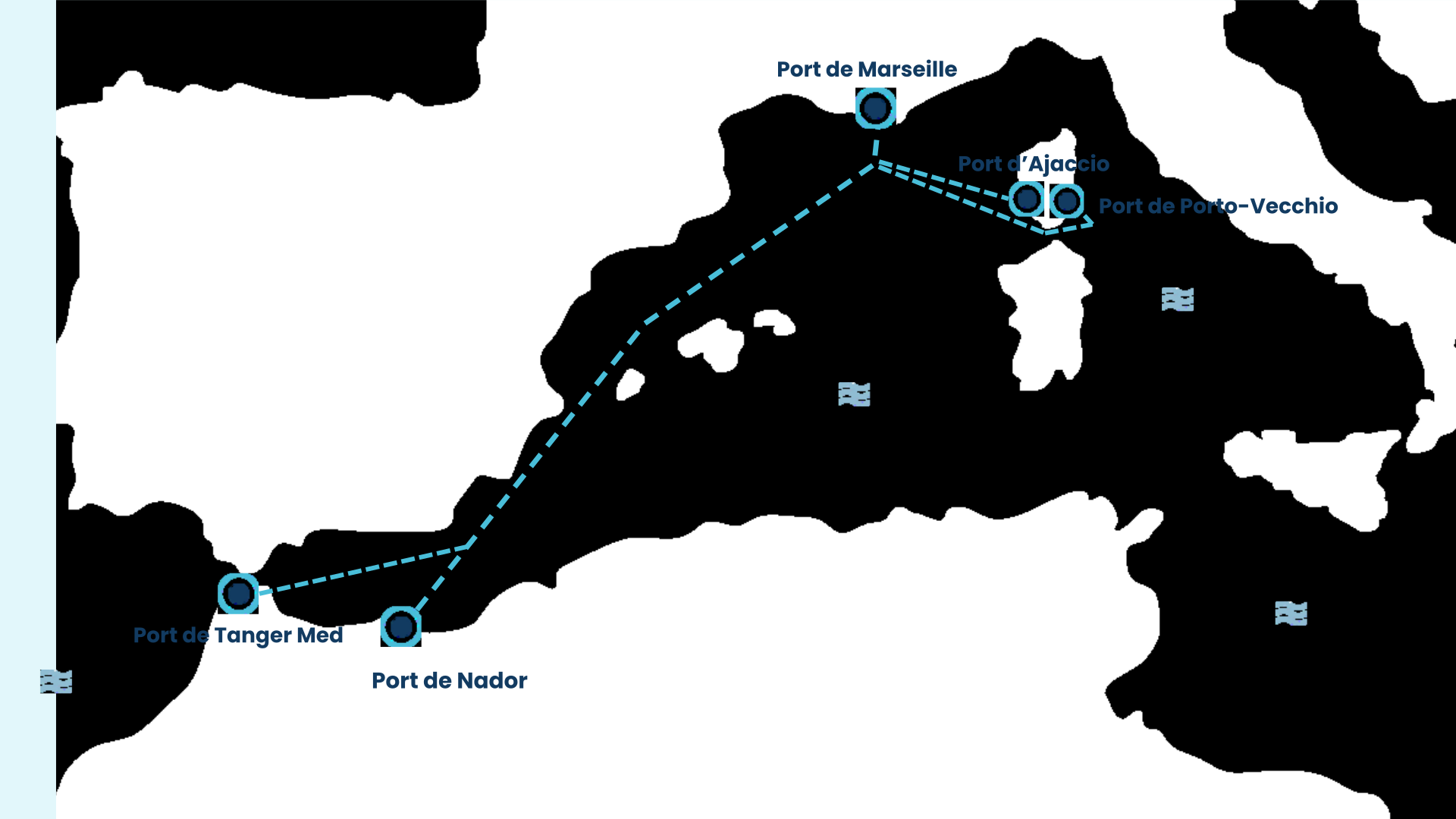
Board one of La Méridionale's ferry for Tangier to discover the fervor that drives the country during this special month.
Ramadan 2026: from February 17 to March 19
In order to continue your Ramadan in complete serenity during your Marseille-Tangier crossing, we are modifying our restaurant schedules and adjusting our offers:
- Breakfast: available before daybreak
- Lunch: the restaurant is open at its usual times
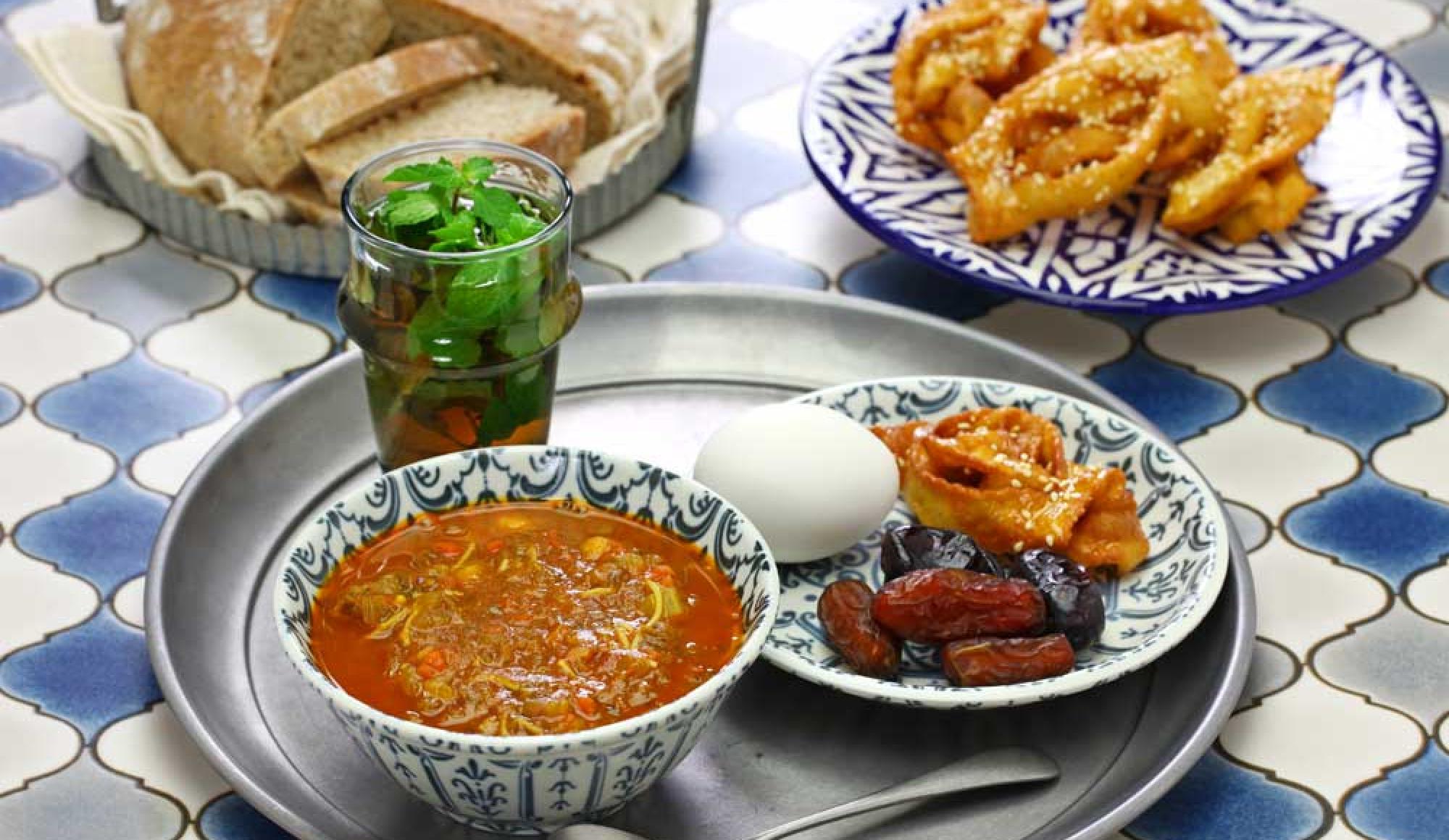
At Ftour time (in addition to our usual offer), harira, dates, eggs and oriental pastries are to be enjoyed to help you break the fast in peace.
- Dinner: you can take away a meal for the night (instead of lunch)
In the evening, the lounge bar and self-service restaurant open overtime depending on how busy it is.
What's Ramadan?
To simply answer the question what is Ramadan, we can say that Ramadan is one of the five pillars of Islam, alongside prayer or the pilgrimage to Mecca.
The history of Ramadan says that it was during the ninth month of the year, called in Arabic ar-ramad, that the angel Gabriel is said to have appeared to Muhammad to reveal the Koran. Since then, Muslims around the world have been fasting from sunrise to sunset to commemorate this event.
Ramadan, in Morocco or elsewhere, lasts a month (29 or 30 days). This holy or blessed month, as the faithful call it, begins on the first day of the ninth month of the Hegirian calendar. As it follows the lunar cycle, its date changes every year. The first and last days are defined by observing the moon, on the night of doubt.
To better understand what Ramadan is, it's important to know that fasting isn't its only aspect. These four weeks are dedicated to prayer, self-reflection and generosity. Believers are encouraged to adopt exemplary behavior, reflect on their past conduct and perform good deeds. Thus, at the end of the month, households that can afford it pay the zakât - al-Fitr, the alms for breaking the fast. This donation to the poor can be made in kind or in money, through an charity or the mosque.
Moroccans take advantage of Ramadan to get together. It's customary to invite and visit extended family and friends for the breaking of the fast. After the meal, young and old gather in the living room to watch series and TV movies shot especially for the occasion.
What are the rules of Ramadan?
During the 30 days that Ramadan lasts, the faithful may not eat, drink or smoke from dawn to sunset. Among believers, only the sick, children and pregnant women are not affected by this rule.
Religious texts additionally prohibit sex and make-up during the day. Throughout the month, swearing and gossiping must be abstained from. Prayer and reading the Koran, on the other hand, are encouraged.
Making Ramadan in Morocco is not a legal obligation, even for observant Muslims. Everyone is free to fast or not, in accordance with their faith. However, the practice is widespread from north to south of the country. It is rooted in Morocco's history. The religious festival has become a tradition and a social rite.
The Moroccan Penal Code (article 222) prohibits Muslims from eating, drinking or smoking in public in broad daylight during the month of Ramadan. This provision, made before Morocco's independence, does not apply to tourists. Tourist sites and museums welcome visitors, but adapt their opening hours. So you can explore Marrakech, Ouarzazate or the Valley of the Roses during Ramadan. Restaurants remain open.
A typical day in Ramadan in Morocco
Ramadan days in Morocco are punctuated by prayers, those said by the faithful five times a day, and those of the muezzin, which mark the beginning and end of the fast.
Moroccans rise before dawn and the first call to prayer. They take advantage of these few minutes to have shour (sometimes written suhoor or sahur). This breakfast can be light, consisting for example of a glass of milk and dates, or more substantial with bread, pancakes and mint tea.
As soon as the muezzin's voice is heard, eating and drinking are forbidden until dusk. But being idle is out of the question. Life goes on between daily prayers, professional obligations and family duties.
At nightfall, the blasts of the cannon and the call to evening prayer announce the breaking of the fast. It's time for ftour (or iftar). As you leave the mosques, a meal is offered to the poor and those who have come to pray. If you're traveling to Morocco during Ramadan, slip in among the crowds to taste traditional dishes and feel the fervor of the believers.
What to eat during Ramadan
From Tangier to the edges of the Western Sahara, no one wonders what to eat during Ramadan. The tradition in Morocco is to break the fast with harira. This Andalusian soup made with meat, vegetables, tomatoes and onions can be found on tables all over the country. In addition to being tasty, it helps rehydrate the body and regain strength.
Ramadan in Morocco is also an opportunity to enjoy zaalouk as an appetizer. Before tajines, couscous and other pastillas, you can enjoy this eggplant caviar with garlic and cumin.
Although texts recommend moderate eating during Ramadan, it's impossible in Moroccan culture to go without pastries. Dinner concludes with briwates, a turnover filled with almonds and flavored with cinnamon and orange blossom, or chebakias, a rolled cake with honey and sesame.
If you'd like to visit Morocco in a different way or join your loved ones for the holy month, book your crossing with La Méridionale. Our ferries connect Marseille and Tangier all year round.
Stay in touch
Subscribe to our newsletter
You'll be the first to keep up with our latest mediterranean news and exclusive offers
Invitations to travel
- Locations
Moroccan desert and southern valleys
- Locations
Marrakech in december
- Discovery
Fancy visiting Morocco: follow the guide
Our destinations
Ajaccio
Porto-Vecchio
Tangier
Marseille