Discovery
What better way to explore Morocco than by campervan or motorhome?
You'll enjoy the landscapes in complete freedom, without worrying about train schedules or hotel availability.
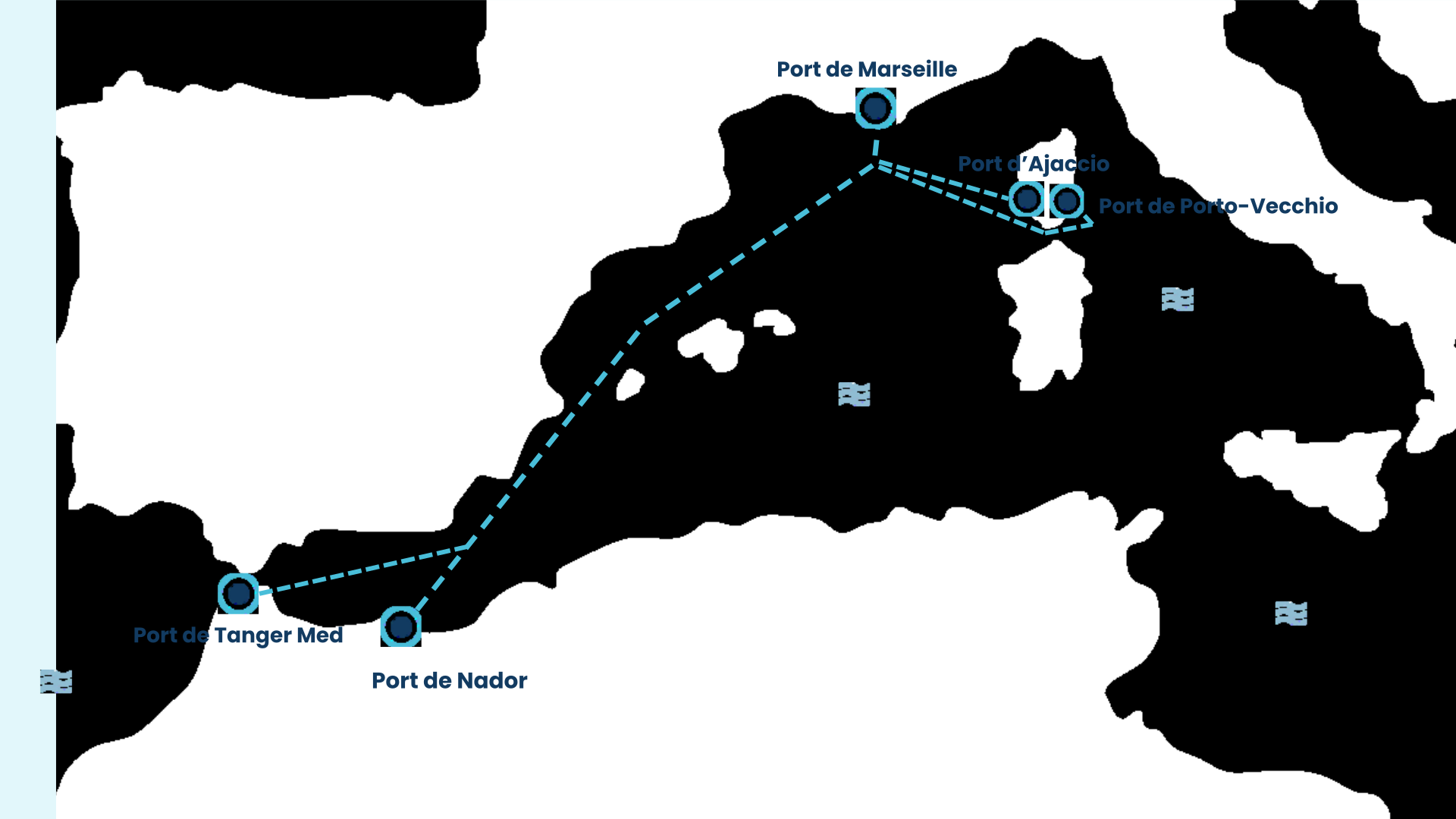
With its new Marseille-Tangier route, La Méridionale takes you on a journey to discover the Kingdom of the far-distant setting sun. Our ship, the Massalia is equipped for your comfort and the safety of your vehicle.
After a relaxing crossing, you'll be ready to drive to the imperial cities, sandy beaches or oases of the Moroccan desert.
Prepare your crossing to Morocco with your campervan or motorhome
The motorhome rental in Morocco turns out to be rather tedious. Only one professional agency operates from Marrakech. So it's best to travel with your own vehicle, or rent one in France.
Before setting off to Morocco in a motorhome, the usual checks are in order: tire pressure, oil and cooling liquid levels, battery charge, etc. It's best to get these details sorted out so you're ready to hit the road!
If your vehicle hasn't been used in a long time, do a complete inventory before you leave to make sure your fridge, heater, water boiler and even air-conditioning are ready for new adventures.
The day you board, you'll need a valid proof of identity. If you're French or from the European Union and your stay is less than 90 days, your passport will do, so you won't need to apply for a visa. If you plan to stay longer than three months, contact the embassy. You can also extend your stay once you arrive.
You'll also need your vehicle papers for customs. In addition to the vehicle registration document, you'll need to provide an insurance certificate covering Moroccan territory. If you don't own the vehicle, you must also have:
- a declaration from the owner authorizing you to travel to Morocco with their vehicle;
- or the rental agreement.
At customs, an agent will take your verbal statement, but you have no tax to pay, as long as you leave Morocco with your motorhome. Otherwise, a tax equivalent to a percentage of the vehicle's value is required. To avoid having to pay hundreds or thousands of euros in the event of theft or accident, contact your insurance company. Some policies cover the return of the damaged vehicle, or the fees charged for leaving the country.
With La Méridionale, boarding on the ferry to Morocco starts 7 hours before departure.
The latest check-in time is 2 hours before departure.
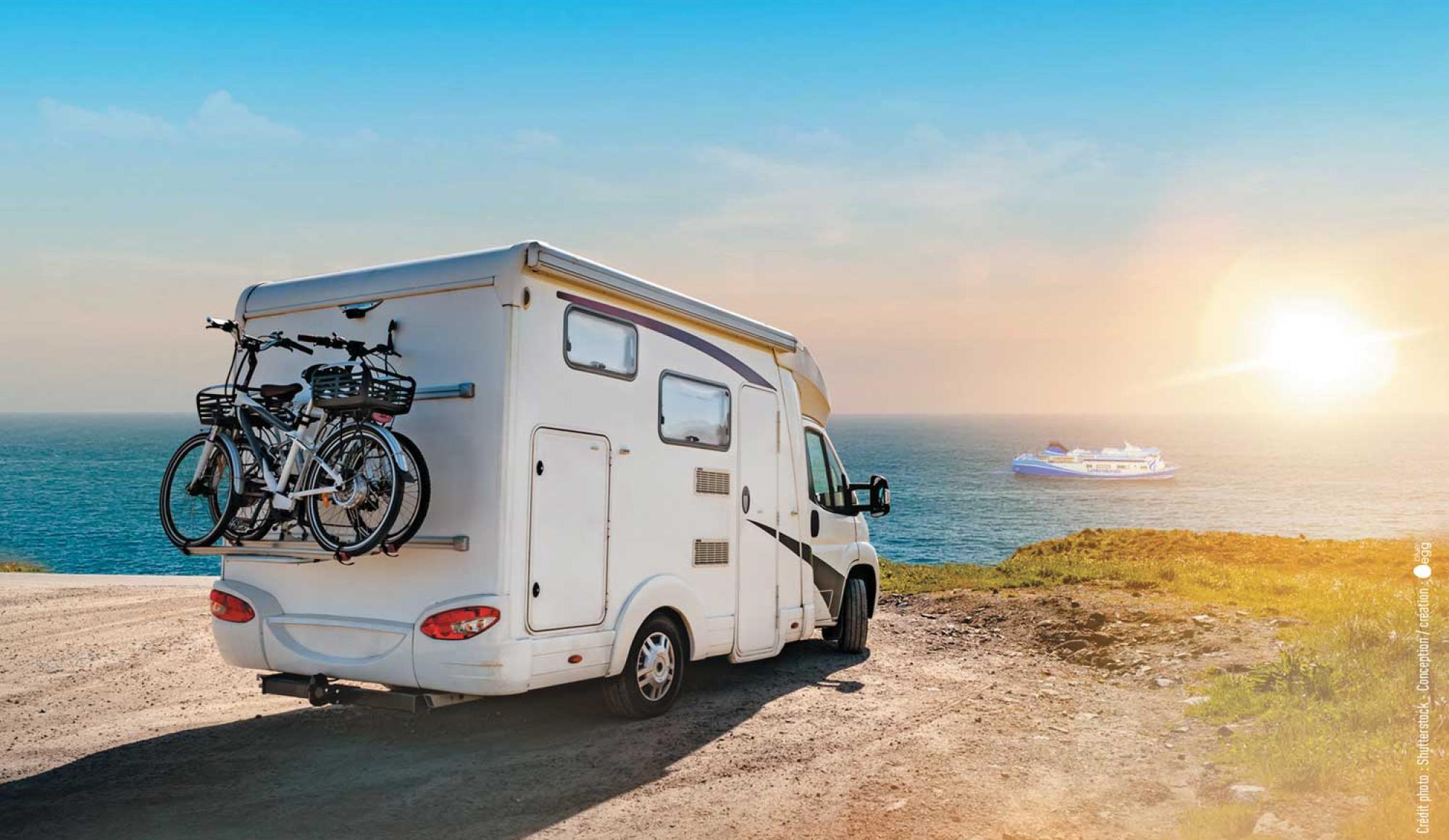
After checking your boat ticket to Morocco, the crew guides you to the ship's parking deck. You park your motorhome yourself in the space designated by the staff, who will also tell you to:
- set the handbrake
- engage first gear
- turn off your lights and disable your alarm system.
Our parking decks are equipped with a few 220 volt power sockets to plug your motorhome into during the crossing. When you board, let our staff know that you'd like to be installed near one of them. Depending on availability, you'll be able to recharge your batteries and preserve their autonomy.
Our boats are designed to accommodate passenger vehicles as well as freight trucks, whatever their size. Thanks to their training and experience, they are perfectly able to install different loads. With La Méridionale, you're sure to sail your motorhome in optimal safety conditions.
Passengers have no access to the parking deck during the Marseille-Tangier crossing. Once you've packed everything you need for your trip across the sea, head to reception where our butler will show you to your cabin.
Let Léon be your guide!
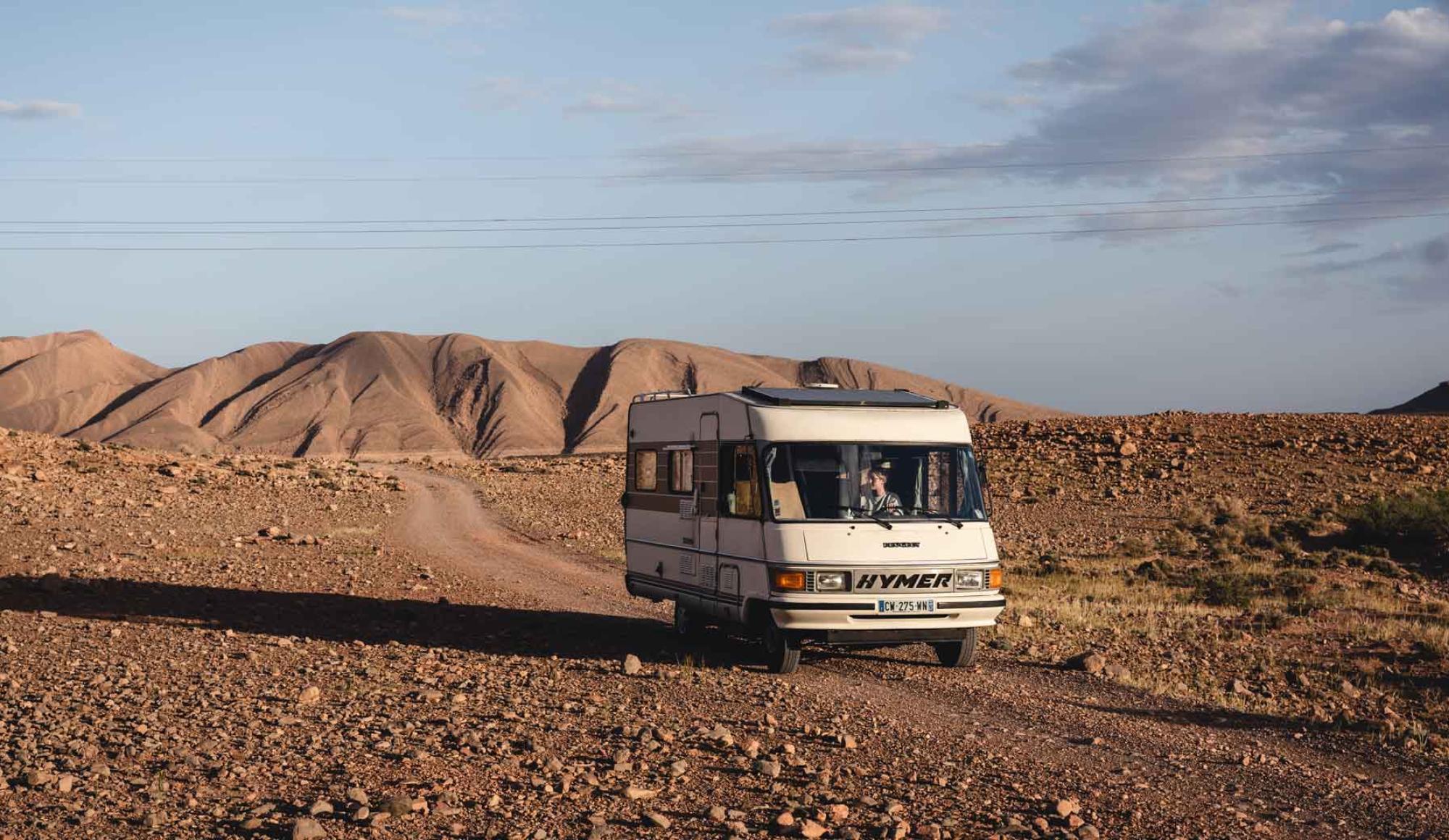
Léon is the vintage Peugeot J5 Hymer motorhome of Camille and Thomas, an adventurous duo who have just spent 3 months touring the Moroccan roads.
Administrative precautions to take before departure, budgeting on site or even the best spots to sleep, our two "vanlifers" share everything with you!
Find their valuable tips in the form of a checklist to best prepare your road-trip to Morocco: https://liveyouradventure.fr/voyage-aventure/ferry-maroc/
Driving in a campervan or motorhome in Morocco: what you need to know
The French driving license allows you to travel in Morocco in a motorhome. As in most countries, drivers drive on the right. The highway code is fairly similar to the one we apply, even if there are some differences.
Speed limits, for instance:
- 40 km/hour in city centers
- 60 km/hour in other parts of towns
- 100 km/hour outside built-up areas
- 120 km/hour on the freeway.
The authorized speed is indicated by a sign identical to those we know. Police checks are frequent and carried out using the latest technological tools. In the event of speeding, you'll have to pay a fine that can amount to several hundred euros.
Another point of vigilance, alcohol is forbidden behind the wheel. The driver's blood alcohol level must be 0. If you're checked with a higher level, you're liable to a fine of between 500 and 1,000 euros, suspension of your license and even a prison sentence.
As in France, it's obligatory to fasten your seatbelt, including for passengers. You must also have a reflective vest, warning triangle and spare wheel in your vehicle.
Highways and tolls
The country has a safe, well-maintained motorway network. Beyond these major routes, road conditions vary. While some have recently been refurbished, others are more like dirt tracks than national roads. Mountain roads can be daunting for inexperienced drivers. Many of them are not equipped with crash barriers.
Driving in Morocco at night, whether in a motorhome or a car, can reserve some... surprising encounters! Dromedaries and herds of goats are likely to appear. It's best to travel during the day to avoid a few unpleasant encounters.
As in France, you have to pay to use the motorway. The toll rate depends on the distance traveled and the vehicle class. Most motorhomes are class 2. Expect to pay around 30 euros (300 dirhams) if you're driving from Tangier to Marrakech, or 3 euros to drive from Rabat to Casablanca. You can pay:
- by credit card
- in cash
- with Jawaz, the remote control bleeper so you don't have to stop.
Parking areas
Wild camping is forbidden in Morocco, whether in a motorhome, a converted van or even a tent.
If you set up for the night in an unauthorized area, you will be kindly but firmly invited by the Royal Gendarmerie to go to the nearest campsite or parking area.
On the Atlantic coast, between Tangier and Agadir, and around major cities like Marrakech, campsites offer you all the comfort you need and more. Your children will no doubt appreciate a stopover in an establishment with a swimming pool, especially during the summer! In the city, you can also stay in a secure parking lot for a fee.
In the south and in less-frequented areas, there are fewer campsites. However, you'll always find a solution to make sure you're not breaking the law. Gas stations have rest areas and parking spaces for truck drivers and camper vans. And in the countryside, families make available to travelers private land on which to make a stopover, for a small fee.
These facilities may be more rudimentary, but they provide an opportunity to get to know Moroccans.
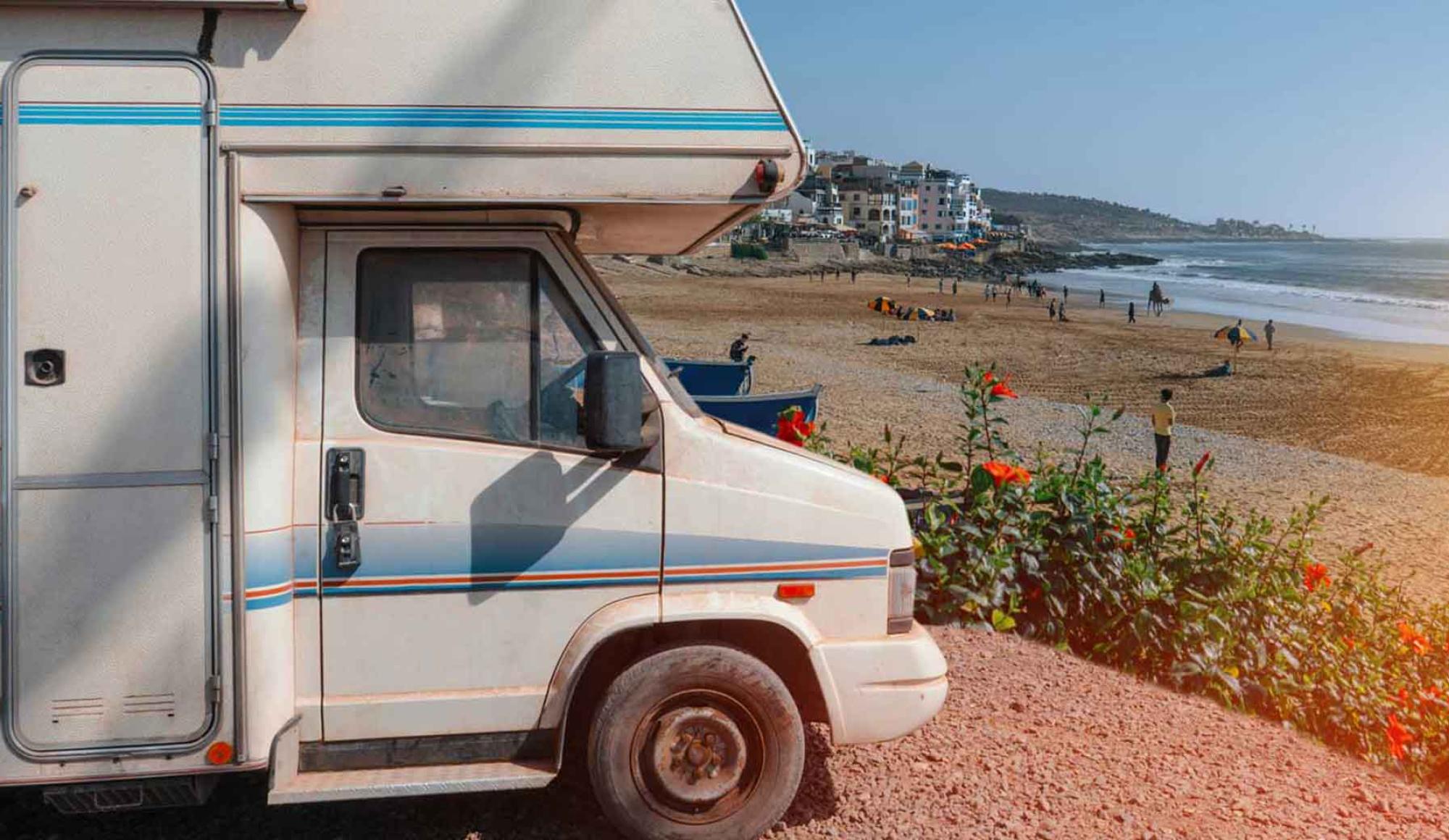
When staying at a campsite, you'll have access to water and electricity. To be able to use the power supply, remember to take your longest extension cord, and to bring various fittings and piping to connect to the water supply.
And to cover all eventualities, the best thing to do is to bring inner tubes, to seal your connections.
Most structures are also equipped so that you can dispose of your grey and black water. You can also ask to do this at a service station. Last but not least, you're allowed to use the drains in towns, preferably at night, for greater discretion.
Other valuable commodities for motorhomers: gas and petrol. Both are readily available and cheaper than in France. You can't always refill your French gas bottle in Morocco. It's easier to buy one locally and have it refilled if necessary. Remember to purge it well before use to remove any impurities that may have crept into the bottle during filling!
Gas stations are located throughout the country. However, in more rural areas, their frequency is reduced. To avoid running out of petrol in the middle of the Atlas Mountains, avoid driving on the reserve.
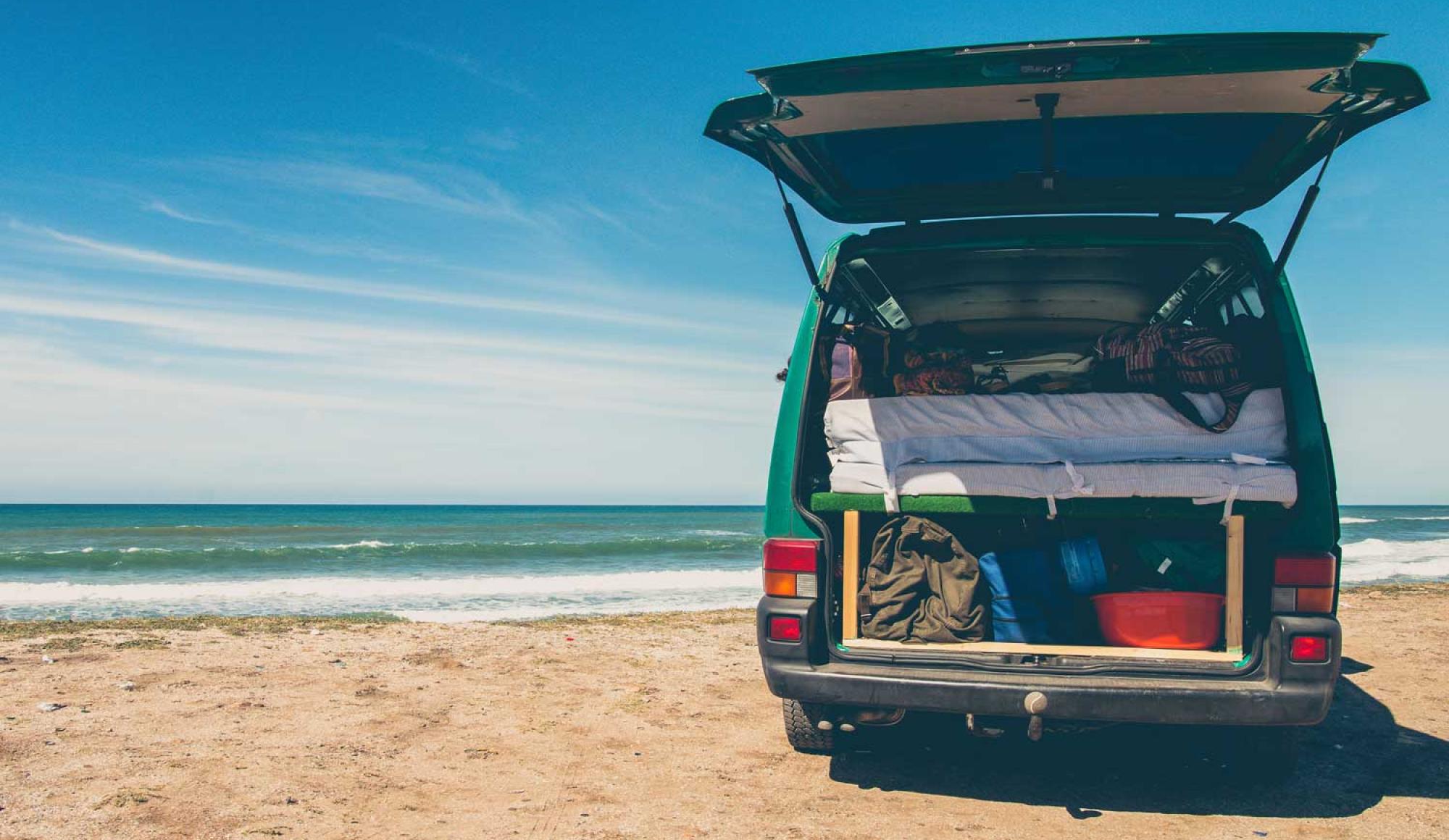
When should you visit Morocco in a campervan or by motorhome?
Morocco enjoys a Mediterranean climate that attracts travelers all year round. However, disparities exist between regions, and some seasons are more favorable than others. Walking, swimming or historic sites, it's up to you to decide when to go to Morocco according to your desires!
Winter, between December and March, corresponds to the high season. At this time of year, campervan and motorhome travellers from all over Europe flee the cold and dreariness to find sun and warmth on the other side of the Mediterranean. In the kingdom, temperatures can reach 25 degrees in the south and it only rains one or two days a month. But nights are cool on the Atlantic coast and snow-capped peaks. Taking a motorhome to Morocco in winter requires a little forethought. Given the crowds, it's best to reserve your place by telephone the same day or the day before at the campsites.
If you want to enjoy some time alone on your road trip, it's best to go in spring or autumn. Between September and November, the tourists have left and you can enjoy the landscapes, towns and beaches in peace and quiet. Although shorter, the days are still sunny.
Spring is the ideal season for visiting Morocco in a motorhome. Temperatures range from 15 to 30 degrees depending on the region, and it hardly ever rains. And, what's more, blossoming trees enhance the beauty of natural sites.
In any case, it's not advisable to travel through Morocco in summer. Temperatures in the central and southern regions are scorching, limiting activities. If you plan to leave during July and August, it's best to drive along the Atlantic coast to catch some fresh air
Morocco in a campervan or motorhome: itineraries and must-dos
Depending on the time you have available and your desires, you can plan several itineraries to visit Morocco in a campervan or motorhome. In any case, you'll find a safe solution to spend the night for a few euros, whether it's a campsite, a petrol service station, a guarded parking lot or a private lot.
On the road to the imperial cities
If you're leaving for ten days or so in Morocco by motorhome, why not organize a tour to discover Morocco's imperial cities of Fez, Meknes, Marrakech and Rabat?
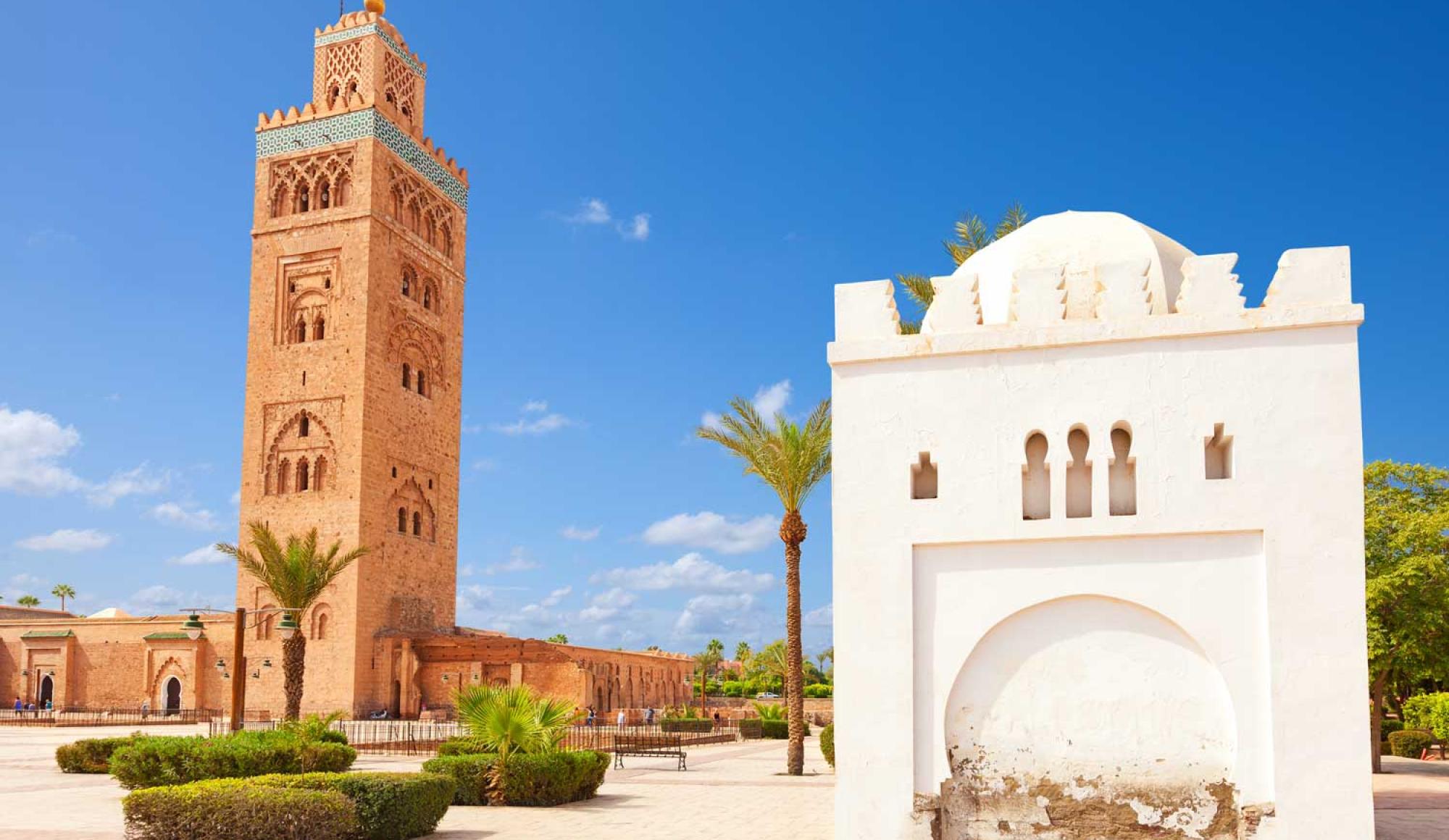
- First day in Tangier to stroll through Perdicaris Park, Cape Spartel and contemplate the view of the Strait of Gibraltar.
- Visit Rabat, the Chellah necropolis and the Kasbah of the Oudayas.
- Stop off in Casablanca to admire the Hassan II mosque and its minaret, the tallest in the world.
- In Marrakech, allow a few days to explore the old town, its medina, the Jemaa El-Fna square and the secret palace. In the modern Guéliz district, don't miss the Majorelle garden and its blue facades. If you still have time, head to the palm grove for a camel ride.
- On the road to Fès: the Ouzoud waterfalls and their macaques, the Khénifra lakes, the Azrou cedar forest and the Ifrane nature park.
- In Fès: palaces, elaborate gates and the medina, the largest in the country.
- In Meknes, don't miss the mausoleum of Sultan Moulay Ismaïl, one of Morocco's only religious buildings accessible to non-Muslims.
- Last stop in Volubilis, an archaeological site from the Roman era.
- Return to the port of Tangier to take the ferry back to Marseille.
Morocco via the coast
Have you decided to take advantage of the summer holidays to travel by motorhome with your children? Well, you're probably wondering where to go in Morocco to escape the heatwave. On the Atlantic coast, temperatures rarely exceed 30 degrees, even in Agadir and the far south.
Between seaside activities and cultural visits, you'll always know what to do in Morocco, even on a rainy day.
It's also a route that suits sports enthusiasts who love surfing, diving and bodyboarding or simply lovers of the sea:
- Arrival in Tangier: head for the old town with its white facades before heading to Sidi Kacem, Sol and Malabata beaches.
- Go to Asilah for its street-art and medina overlooking the ocean.
- Laraches and the Roman ruins of Lixus, Jean Genet's grave and beaches for swimming and water sports.
- Kenitra for a day at the beach, an excursion to Lake Sidi Boughaba or the Maâmora oak forest.
- In Safi: the fully restored 15th-century Portuguese fortress, the fine sand of Lalla Fatna beach, the surf park at Sidi Bouzid.
- In Essaouira: a boat trip to the Mogador Islands, a photo shoot of the ruins of Diabat beach and a surfing session at Sidi Kaouki.
- Tafedna, a fishing village with white and blue houses.
- Agadir: Morocco's largest souk and six kilometers of wind-sheltered beach.
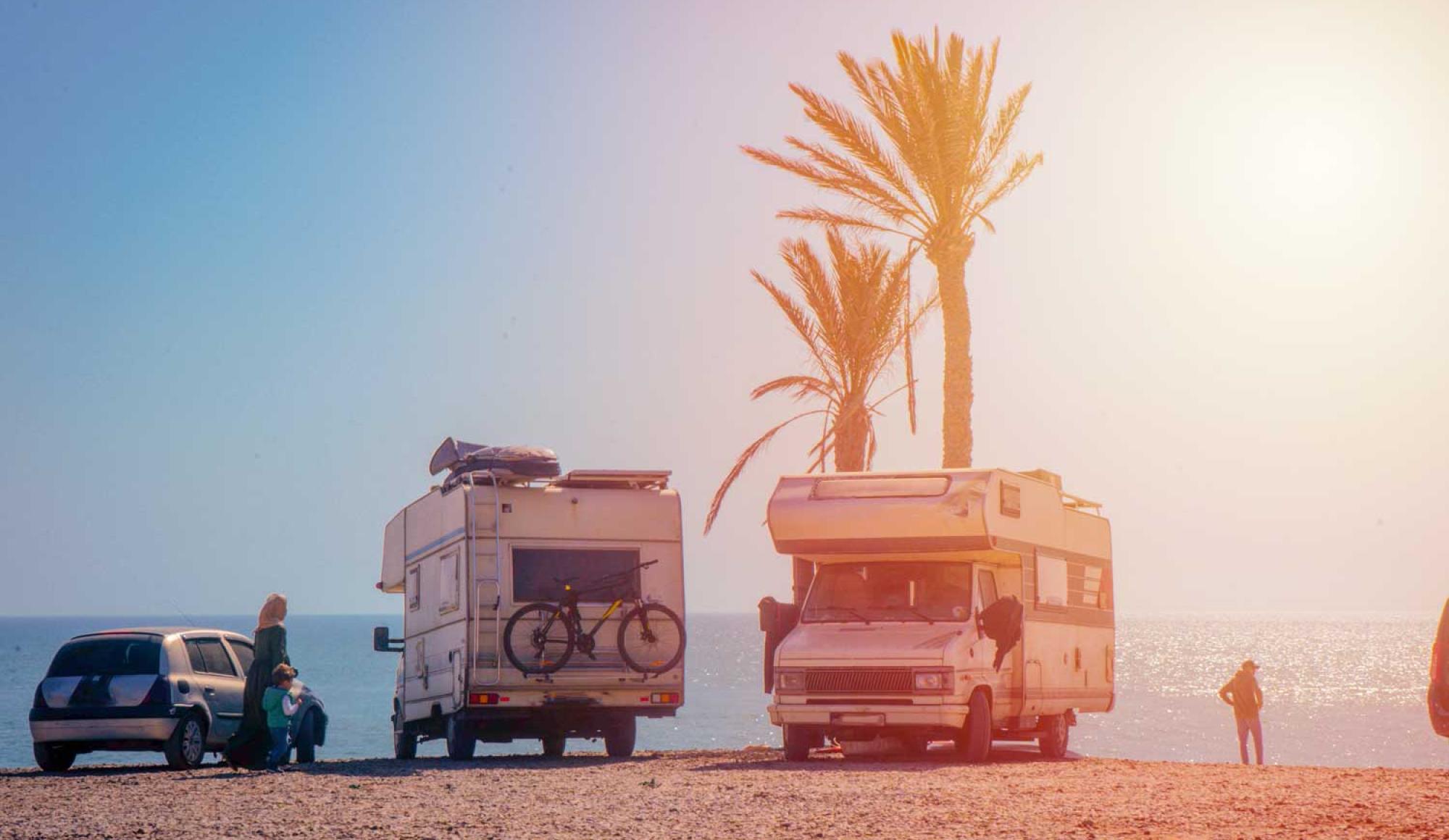
For the return journey, you can retrace your steps or leave the coast to pass through the imperial cities of Marrakech, Fez and Meknes. Before heading back to Morocco in your motorhome, take a break in Tetouan.
The city stands out for its Spanish influence. Here you'll find the Lebbadi Palace, one of the best preserved in the kingdom, as well as numerous museums.
An itinerary between ocean and desert
Are you planning to stay for several months and wondering what to visit in Morocco? This road trip will take you to discover all the facets of Morocco, from beaches to desert, cities and mountains.
- When you arrive in Tangier, stroll along the seafront and through the maze of alleyways in the medina.
- First stop at the archaeological site of Volubilis, a UNESCO World Heritage Site.
- Day trip to the imperial cities of Fez and Meknes.
- Crossing the Ifrane National Park. Several stops to hike around lakes, explore caves and swim in the springs.
- Pass through the Khénifra national park to walk among the cedars.
- Along the oued Dadès, make a stop in the Dadès gorges to admire the sun setting over the high ochre plateaus.
- Stop off in the Valley of the Roses to walk among Berber villages and Damask roses.
- Day trip to Ouarzazate, Morocco's Hollywood, to photograph the sets of Lawrence of Arabia, Games of Thrones and the adobe kasbah.
- The route of a thousand kasbahs: discover Agdz, Tamegroute and Zagora, the last town before Timbuktu and the Sahara desert.
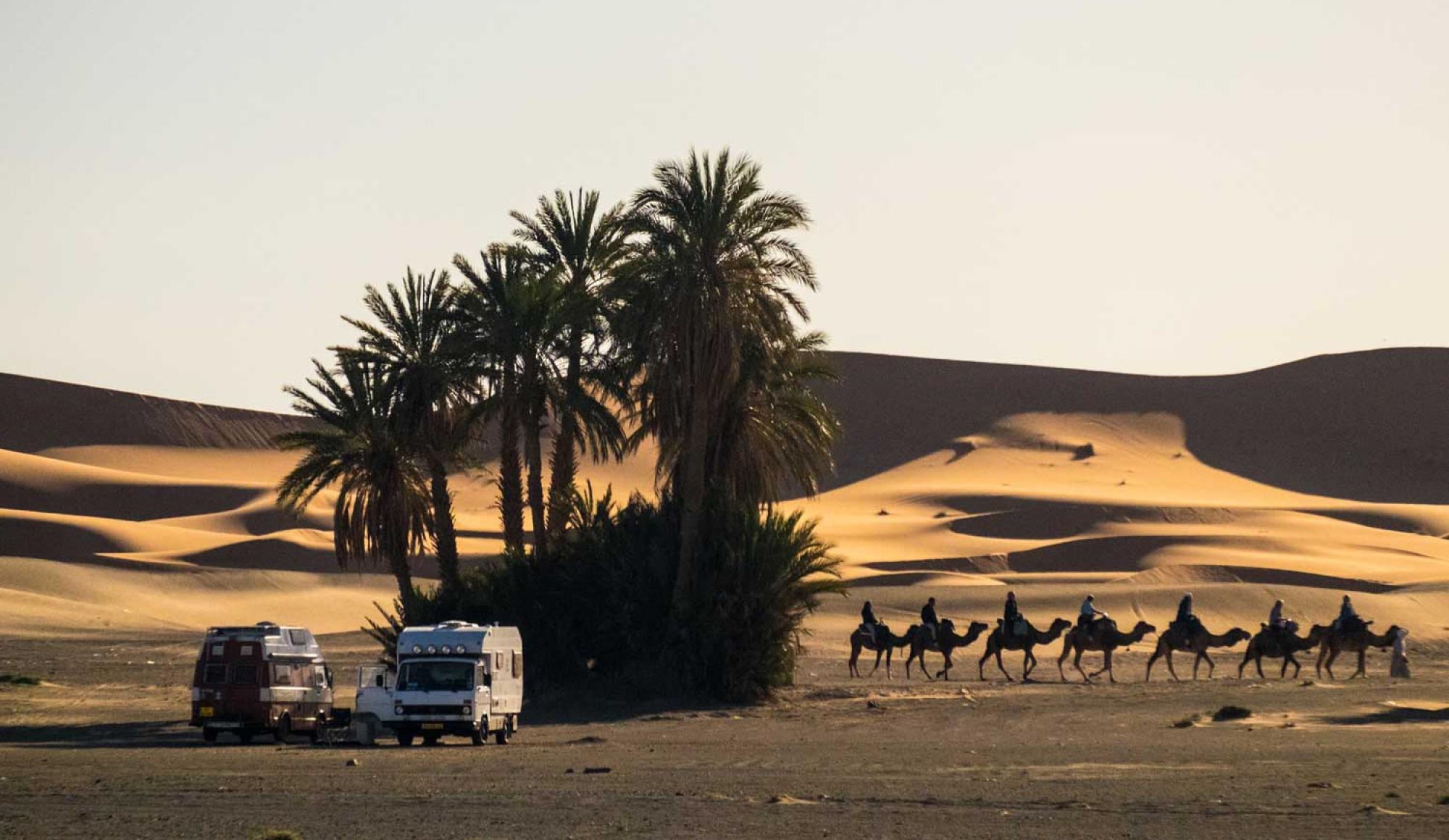
Once you've reached the edge of the desert, you can set course for Agadir and follow the coast all the way to Tangier. But if you're visiting Morocco for the first time, head north to Marrakech. After a few days in the ochre city, you can reach the coast at Essaouira in barely a day's drive.
Have you decided to organize your next holidays in Morocco in a campervan or a motorhome?
La Méridionale operates three weekly crossings between Marseille and Tangier. On board we offer everything you need for a relaxing crossing. We offer full board, quality bedding and entertainment facilities. Whether you head off alone, as a couple, with friends or family, we look forward to welcoming you aboard the Massalia.
Stay in touch
Subscribe to our newsletter
You'll be the first to keep up with our latest mediterranean news and exclusive offers
Invitations to travel
- Locations
Moroccan desert and southern valleys
- Locations
Marrakech in december
- Discovery
Fancy visiting Morocco: follow the guide
Our destinations
Ajaccio
Porto-Vecchio
Tangier
Marseille