Discovery
Corsica is an island with a strong identity. Its idyllic beaches and proud people have contributed to its success. As for its flag, it's recognizable at first glance. But what about its origins and meaning?
The Corsican flag: a real symbol
The Corsican flag is known around the globe: recognizable among a thousand, it features a Moorish head in profile wearing a white band on the forehead. While the visual image and the symbol are powerful, its origins and meaning are often unknown.
Origins of the Corsican flag
The origin of the Corsican flag is a topic of debate, but two assumptions frequently stand out: one finds its roots in a legend, while the other is proposed by historians.
The legend behind the Corsican flag
In the 13th century, a young Corsican woman named Diana was kidnapped by the Moors. These slave traders who were engaged in raiding apparently intended to sell her to the King of Granada, Mohammed. Her fiancé, Pablo, rescued her and they returned to the island, to their town, Aléria.
King Mohammed was furious and sent his lieutenant Mansour to get the young lady back. A terrible battle ensued in which the Moors were defeated and Mansour beheaded with his head placed on a spike and displayed as a trophy.
Legend has it that the head of the Moor was chosen as a symbol to commemorate this day of victory and the people's insubordination in the face of the king's wrath.
The origin of the Corsican flag as seen by historians
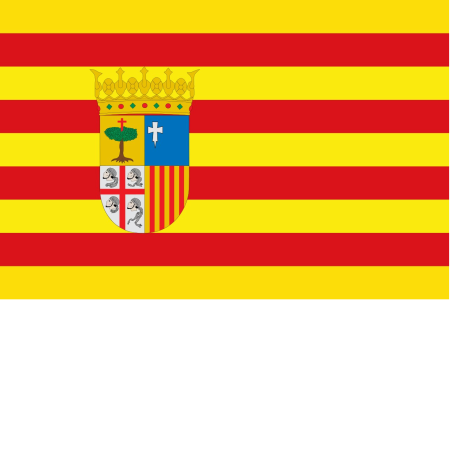
Historians have a more plausible version of its origin. It was customary in heraldic times to take the flag of one's enemy when he was defeated: this is how heads of Moors appeared on the Aragonese flag following victories won during the Crusades. The Moorish head also adorned the seal of King Peter III of Aragon in 1281. The Aragonese coat of arms featured 4 heads.
As Sardinia and Corsica were part of the Aragonese kingdom, Sardinia kept the 4 heads and Corsica just one.
Meaning of the Corsican flag
To understand the significance of the Corsican flag, we need to delve into the history of the Isle of Beauty.
After being offered by the Pope to Spain, Corsica came under the yoke of the Republic of Genoa. In 1755, General Paoli proclaimed Corsican independence, and it was in 1762 that the flag "A Bandera Corsa" became the official flag of Corsica.
It was then sold to the kingdom of France in 1778. It experienced a second period of independence in 1794, and it was in 1980 that the Corsican flag was recognized as a regional flag.
The flag became THE symbol of independence. If you take the time to observe the Corsican flag carefully, you'll see a head with a proud bearing, looking off into the distance, the bandana fluttering in the air: it's a sense of freedom and pride that exudes from this flag, which is why Paoli chose it in 1755.

Evolution of the Corsican flag
The Corsican flag existed long before General Paoli chose it as the emblem of Corsica. At the time, the Moor's head had earrings and was blindfolded. Later, it would wear the headband on the forehead, to symbolize freedom.
Stay in touch
Subscribe to our newsletter
You'll be the first to keep up with our latest mediterranean news and exclusive offers
Corsican flag and by-products
As the symbol of the Isle of Beauty, the Moor's head is emblazoned on a wide array of objects. While Corsicans all proudly display their flag, tourists are tempted by other souvenirs they bring back from their vacations in Corsica.
T-shirts, beach towels, tote bags featuring the Moor's head and Corsican knives are just some of the must-have products you'll find in the stores. Stickers, mugs, magnets and key-rings are also very popular: these are small souvenirs that don't take up space, don't cost much and are sure to please.
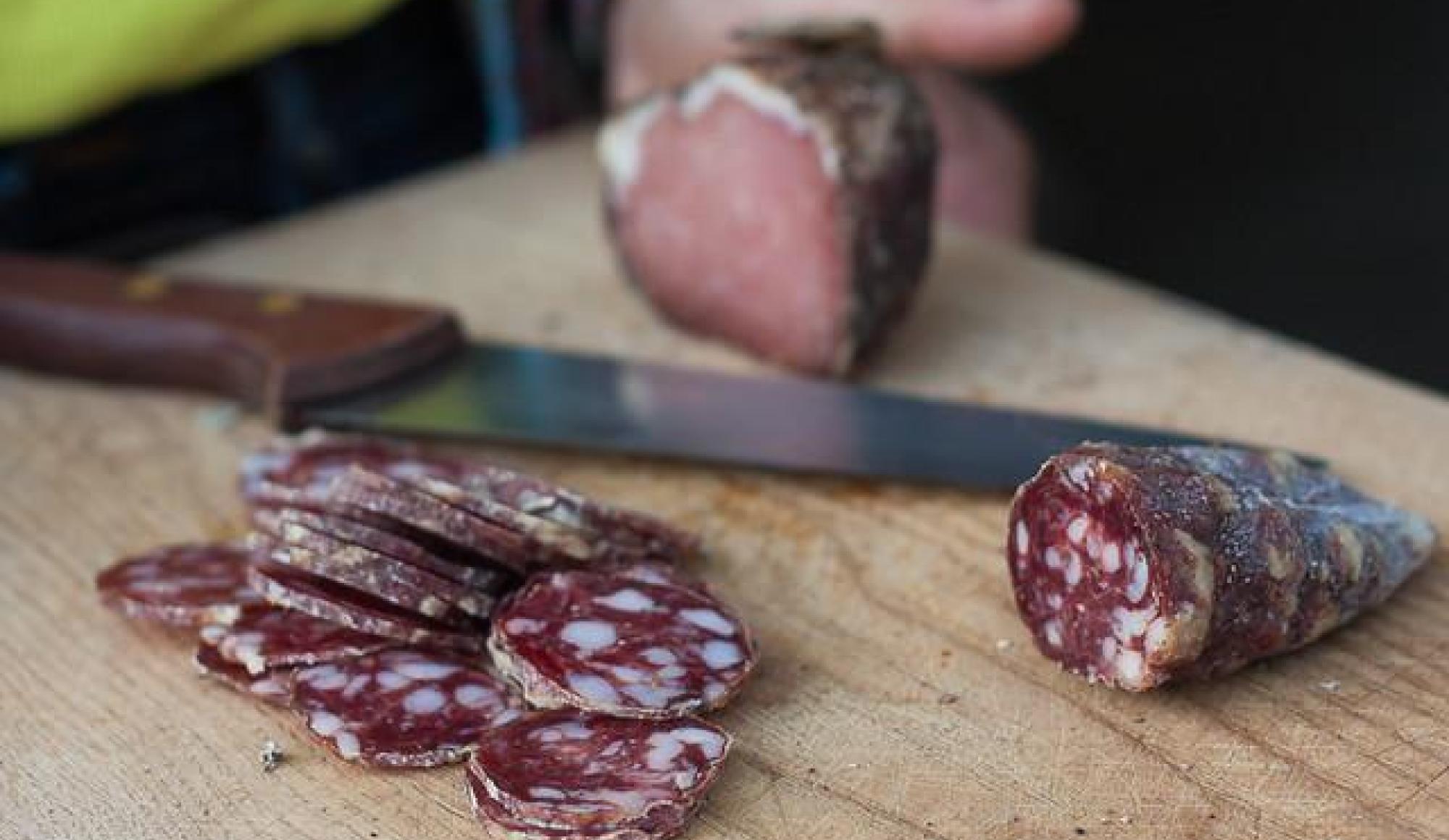
You'll find many other more or less unusual objects in Corsican souvenir stores, but what holidaymakers like above all to bring back from their stay in Corsica are local products. Corsica is indeed renowned for its gastronomy.
Between Patrimonio wine, brocciu, Corsican cold cuts, fiadone and Pietra beer*: you'll be spoilt for choice; So indulge, whether you want to take a little taste of the holidays back home with you, or simply introduce your friends or family to Corsican culinary specialities.
* Alcohol abuse is dangerous for your health - consume in moderation
Invitation to travel
- Activities
Hiking in Corsica
- Activities
What to do in Corsica?
- Activities
Sanguinaires Islands
Our destinations
Ajaccio
Porto-Vecchio
Tangier
Marseille