Discovery
The origins of Corsican cold cuts
Corsican cold cuts are an integral part of the island's gastronomic heritage. La Méridionale invites you to discover gourmet Corsica, a blend of unique flavors, unique to the Isle of Beauty.
Composition of Corsican cold cuts
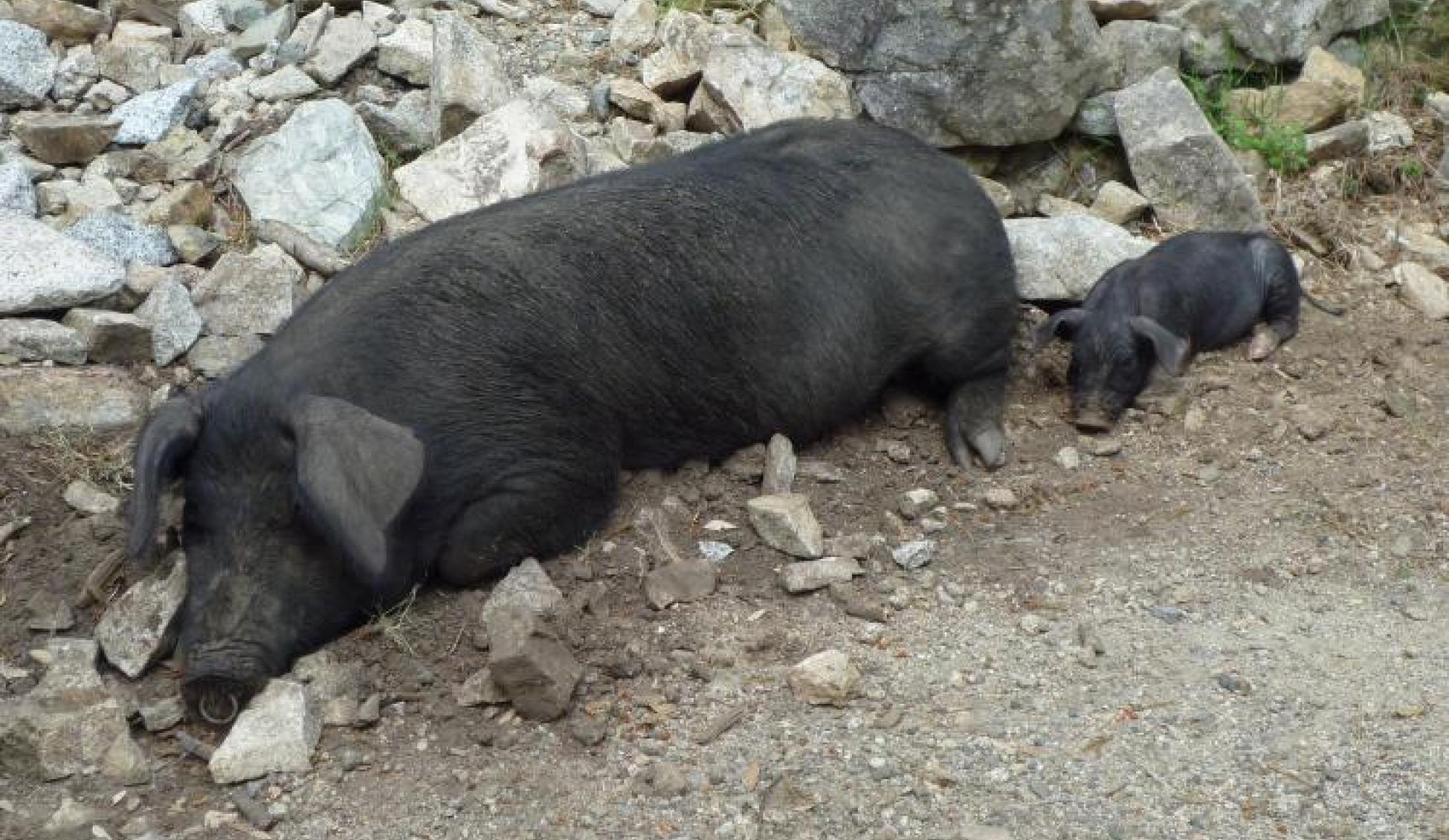
Genuine Corsican cold cuts are made from "nustrale" pigs raised in semi-freedom. This species of island pig lives in the heart of the forests and scrubland, feeding on grasses, chestnuts, worms and fern roots, etc. (in addition to the food provided by the farmer). In autumn, porcu nustrale feed exclusively on acorns and chestnuts. This is how they store the high-quality fat that gives Corsican cold cuts its full flavor.
Preparation of Corsican cold cuts
During the winter period, the breeder prepares his pieces of cold cuts and his spice mix, then proceeds to salting, flavoring, smoking with chestnut wood, drying and finally maturing.
CDO (AOC) to protect the Corsican gastronomic heritage
Faced with major fraud and an upsurge in counterfeit products stamped "charcuterie corse" (Corsican cold cuts), traditional breeders got together in 2012 to create a label certifying the authenticity of the products sold. This Controlled Designation of Origin (AOC in French) concerns 3 iconic products of the Corsican terroir:
- "Prisuttu" or "Corsican cured ham"
- "Coppa di Corsica" or "Corsican Coppa"
- "Lonzu" or "Corsican Lonzo"
The "Salameria Corsa" logo is stamped on these local products so you can easily recognize them.
The different types of Corsican cold cuts
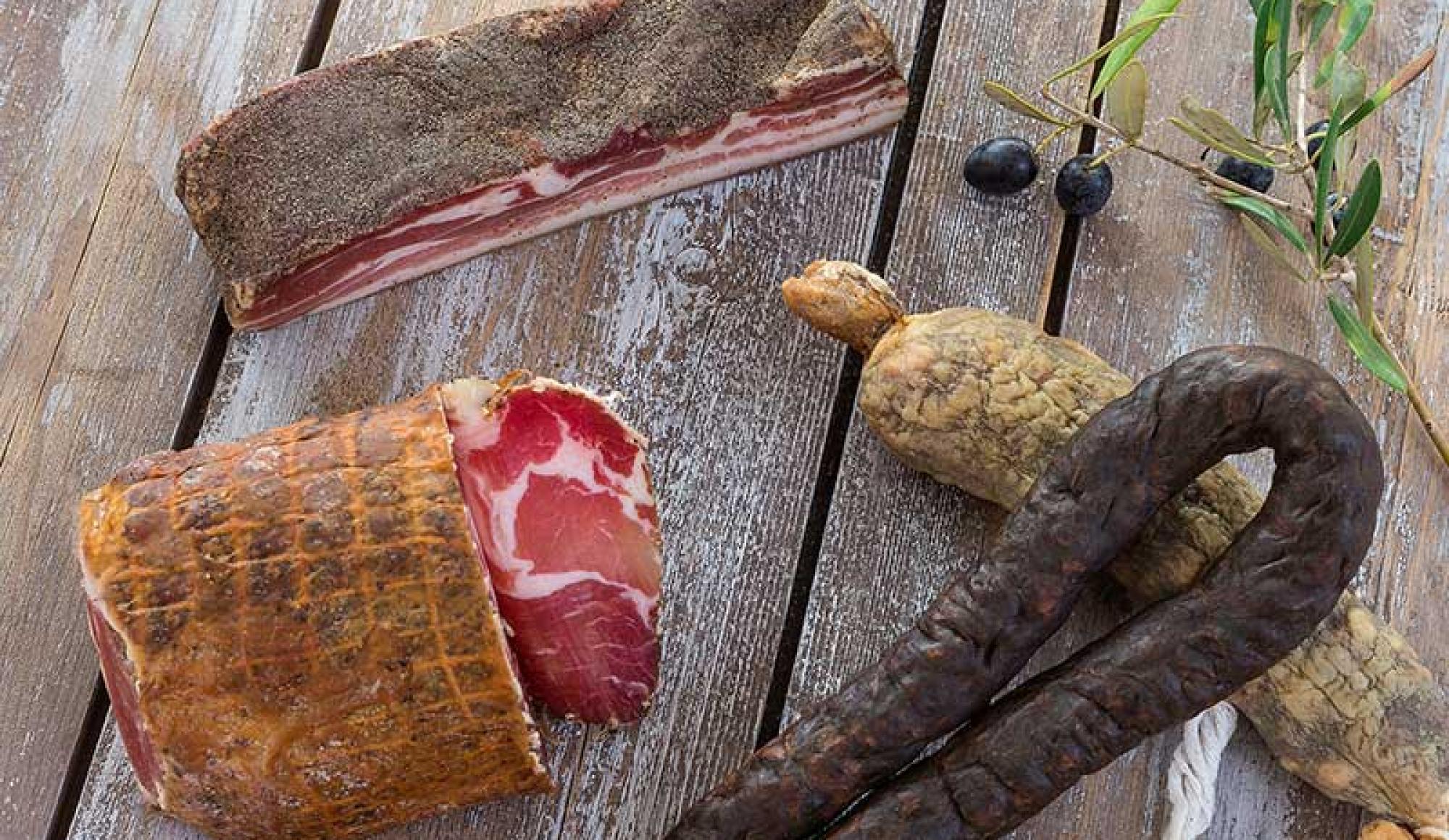
While only three 3 products from Corsican cold cuts are protected by the CDO (AOC) label, there are others just as essential. Here's a quick roundup of the star products of Corsican cold cuts.
"Prisuttu" or "Corsican cured ham"
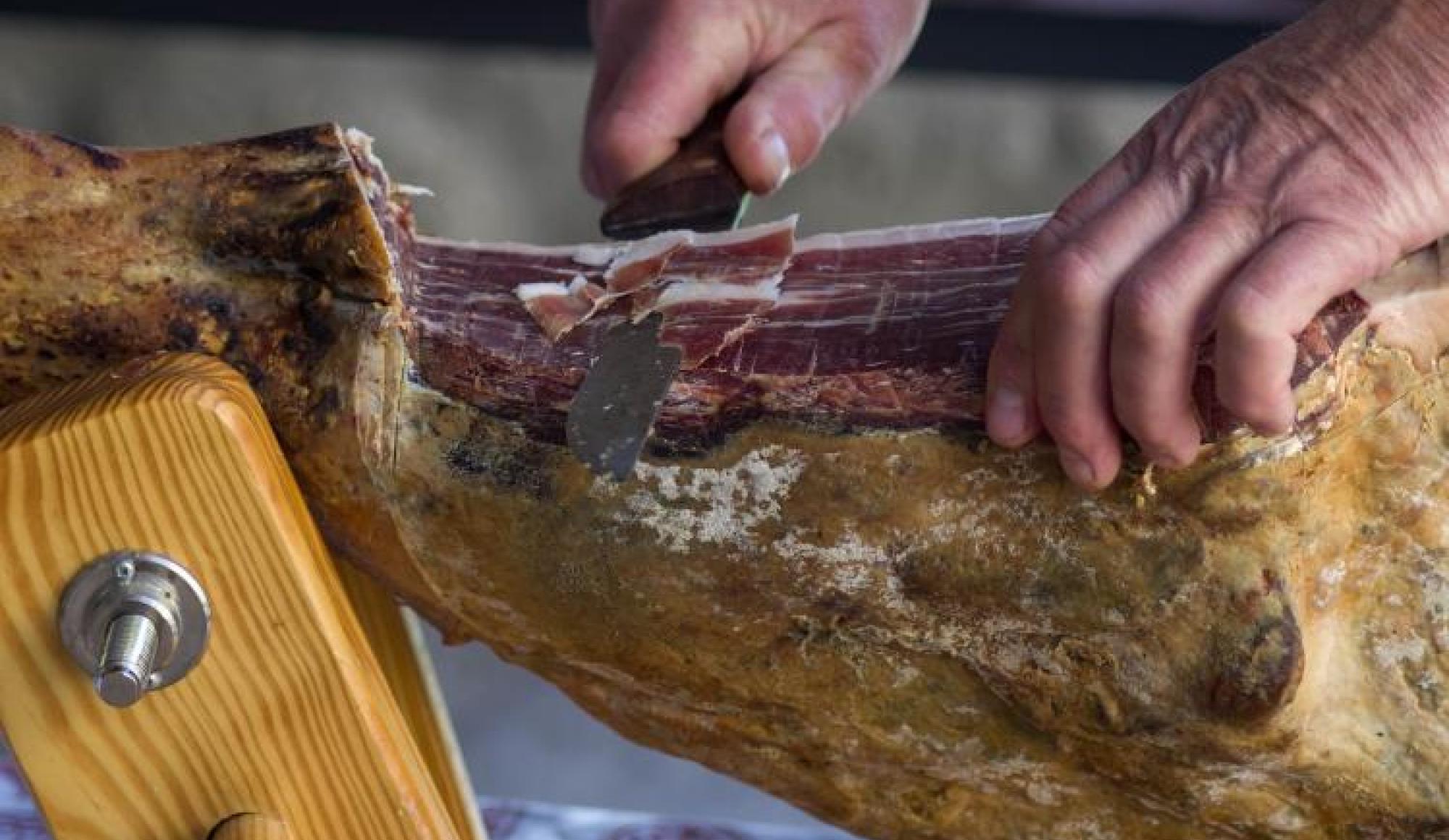
Prisuttu is made from the "Nustrale" pork leg.
It's an exceptional ham with an elongated shape and a nutty flavor. Firm yet rich, you can buy it whole on the bone, portioned or sliced. Prisuttu takes 4 months to mature and can be eaten all year round.
Don't hesitate to eat the fat of this cured ham, as it's what gives it all its flavor.
"Coppa di Corsica" or "Corsican Coppa"
Corsican Coppa is made from "Nustrale" pork shoulder. These round slices are eaten finely cut, giving off aromas of hazelnut and butter with a slightly smoky taste. Supple and unctuous, its color is a bright red interspersed with fat. It takes 2 months to mature, and can be eaten from spring to summer.
"Lonzu" or "Corsican Lonzo"
Lonzu is made from "Nustrale" pork loin. It's easily recognizable with its slice of covering fat that takes ⅓ of the slice. In fact, it's the fat that gives the buttery, smoky hazelnut flavor so characteristic of Corsican Lonzo. It takes 1 month of maturing to enjoy it in spring. It can also be stored to enhance its taste even more.
"Panzetta" or "Pancetta"
Panzetta is made from the belly of the "Nustrale" pig. Rolled or flat, it offers unctuous flesh with notes of maquis herbs and chestnuts that alternate with layers of meat and fat, much like lard. Corsican Pancetta can be enjoyed all year round, both as an aperitif and in Corsican recipes for which it has become a must.
"Salsiccia" or "Corsican saucisson"
Salsiccia is made from the shoulder of the "Nustrale" pork. You'll also find a variant with wild boar. Its taste is slightly peppery, as for its firmness, this will depend on its curing time, which is a minimum of 5 weeks, in winter. Clearly, your Corsican Saucisson will be dry in summer because it will have dried in winter, so if you find tender ones in summer, don't buy it. Beware if you find donkey saucisson, it is in no way part of Corsica's regional products.
"Figatellu" or "Figatelli"
Figatellu is made from the liver, meat, lean and fat of the "Nustrale" pig. It exudes notes of spice, garlic and wine. While other parts of the offal may enter into its composition, the Figatellu from Southern Corsica is stronger on the palate than the one from Haute-Corse because it contains more liver. Its U shape makes it instantly recognizable. Fresh Figatellu is best enjoyed grilled in winter, around 10 days after production. Dry Figatellu, on the other hand, is enjoyed all year round as an aperitif.
How to enjoy your Corsican cold cuts
To bring out the different flavors of your Corsican cold cuts, there's nothing like a good wine, CDO (AOC) cheese and other products from the corsican terroir.
Which wine should you pair with your Corsican cold cuts
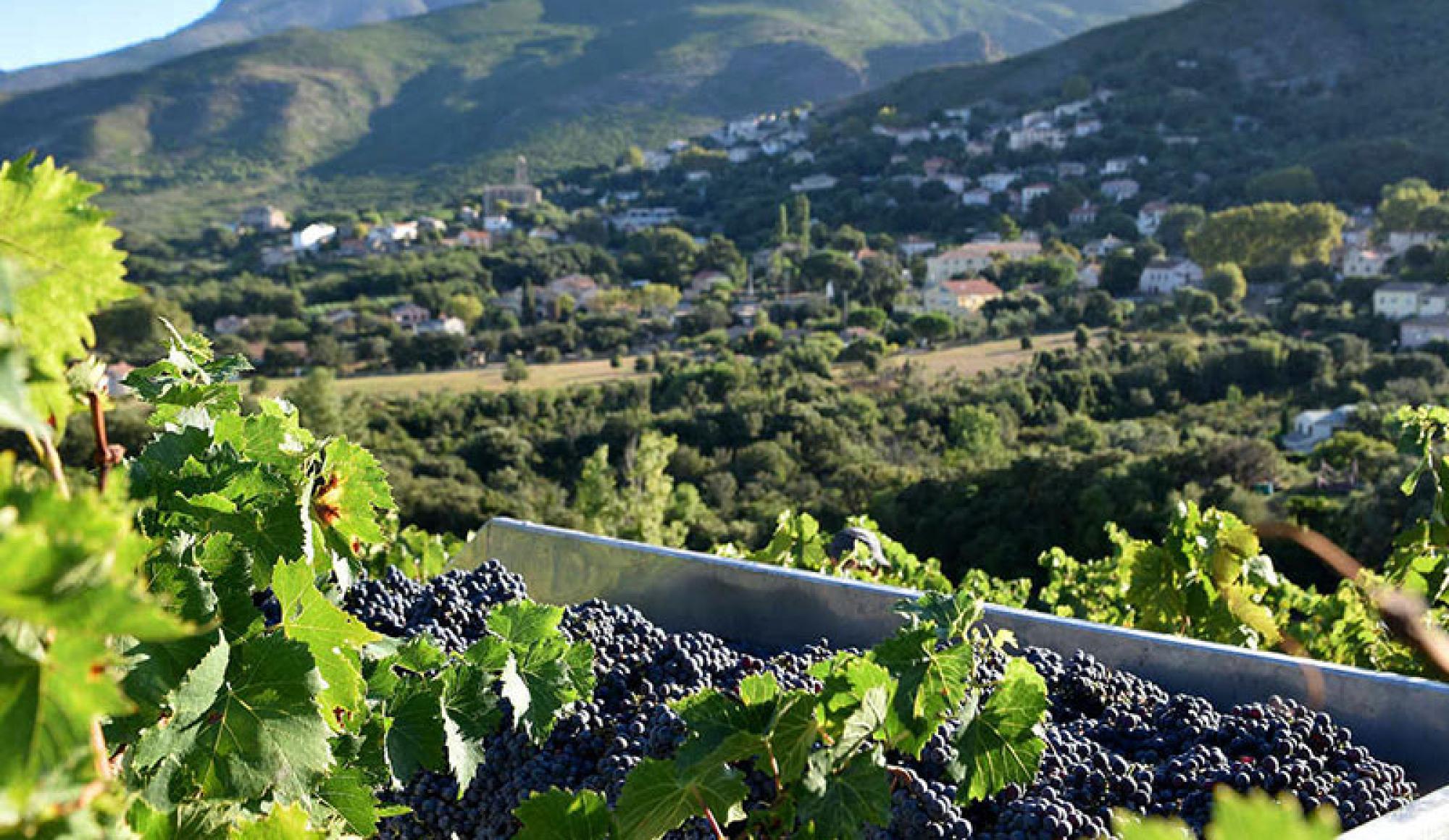
We recommend heading to Haute-Corse, more precisely to the Patrimonio vineyard, which covers 7 communes. There you'll discover a wine that is Corsica's oldest CDO (AOC). The combination of limestone soils and carefully chosen grape varieties results in white, red or rosé wines that will delight your palate and perfectly accompany your platter of Corsican cold cuts.
A coteaux du Cap-Corse, a Controlled Designation of Origin wine also known as "vin de Corse", will pair perfectly with Lonzo, Coppa, or even dry cured Corsican ham.
A Sartène wine, originating in southern Corsica and CDO (AOC) since 1976, will delight your taste buds and will exalt your Corsican cold cuts.
Invitation to travel
- Activities
Hiking in Corsica
- Activities
What to do in Corsica?
- Activities
Sanguinaires Islands

Stay in touch
Subscribe to our newsletter
You'll be the first to keep up with our latest mediterranean news and exclusive offers
Our destinations
Ajaccio
Porto-Vecchio
Tangier
Marseille