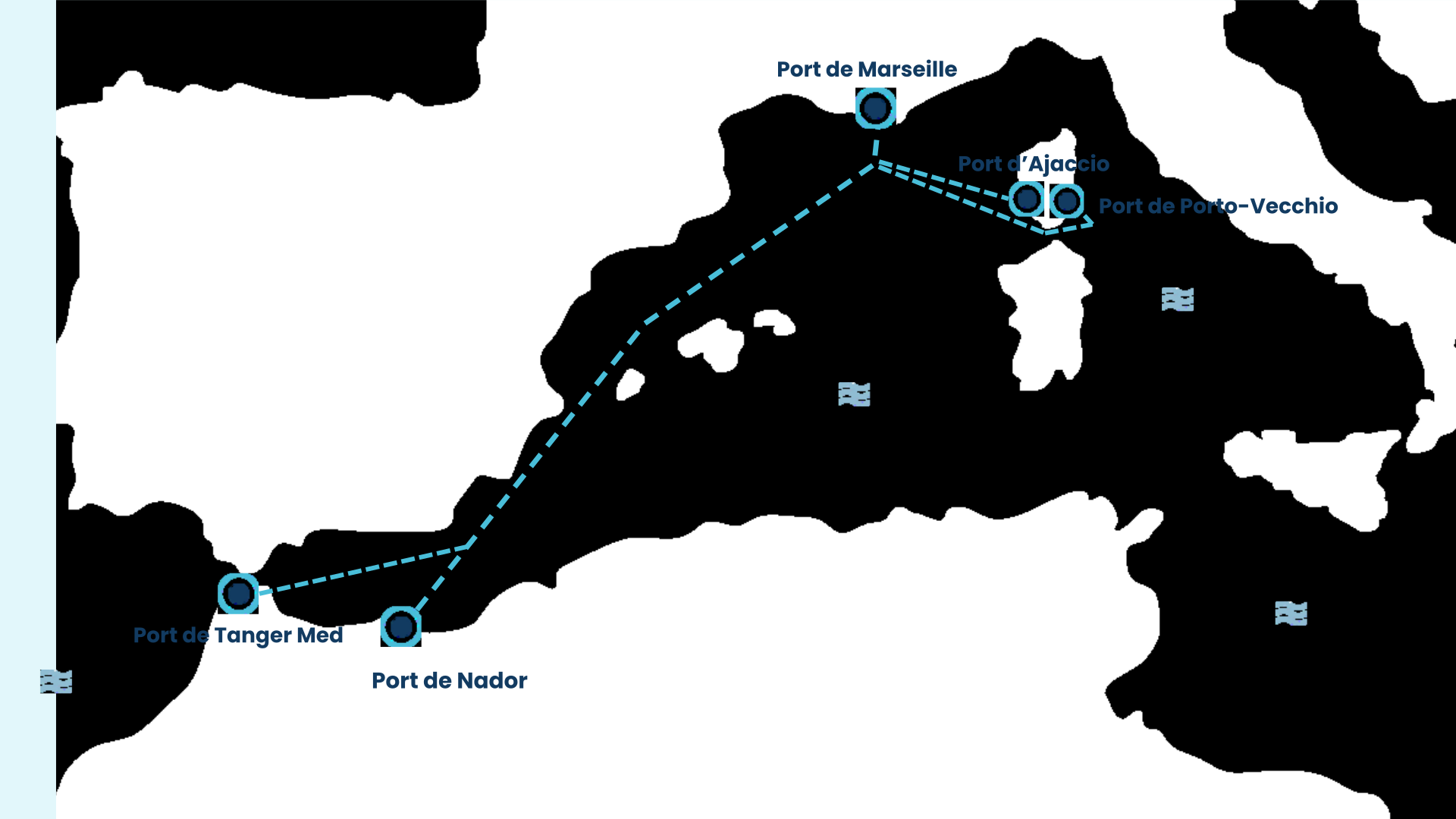
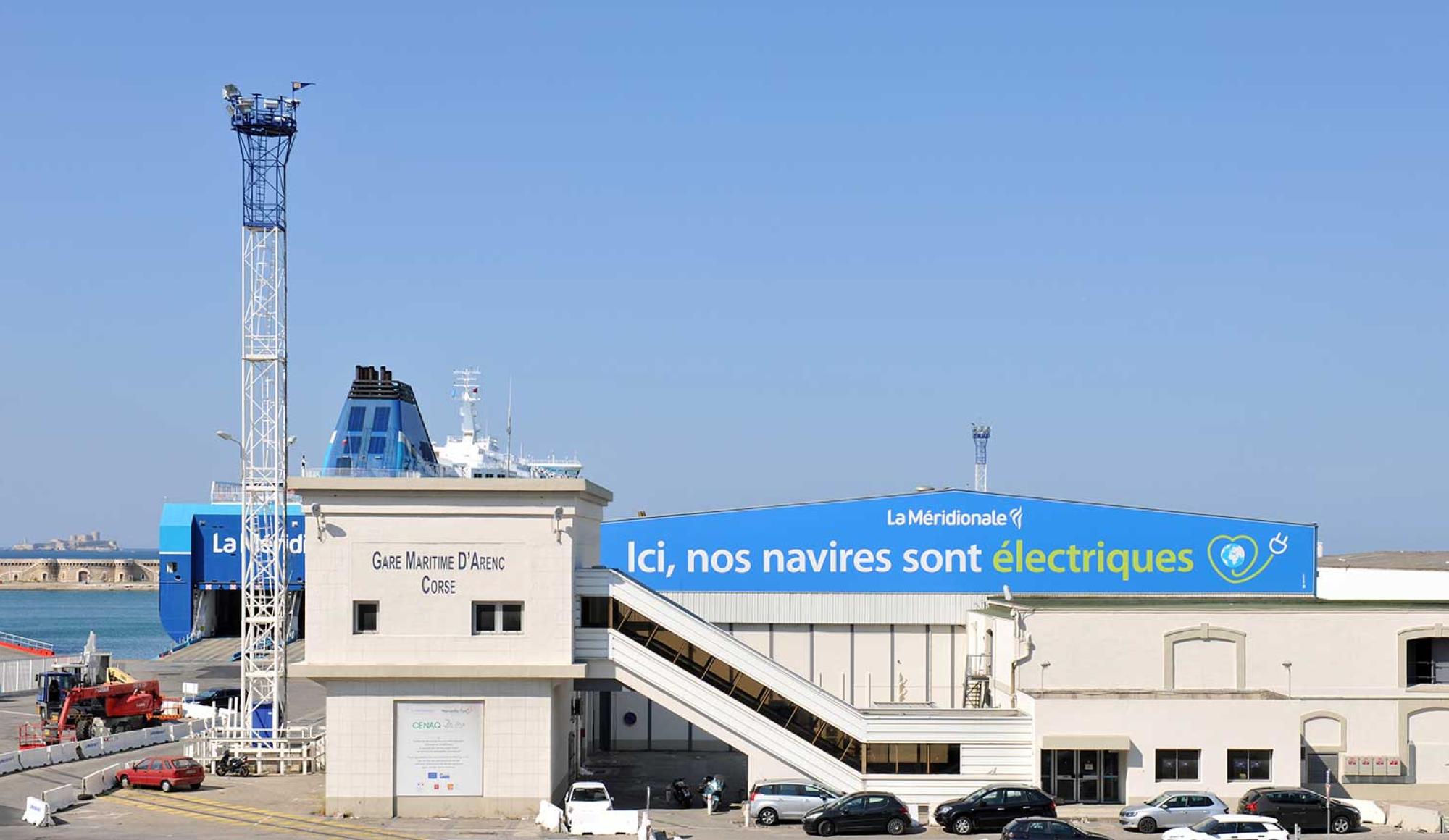
Committed to a sustainable development approach, in 2017 La Méridionale invested in the shore-to-ship power solution (CENAQ) for environmentally-friendly management of its operations. Today, all our ferries to Corsica reduce their environmental impact during their stop-overs in Marseille.
The new commitment of our ferries
for Corsica and Morocco
A ship docked for 12 hours uses the equivalent of the electricity consumption of 300 homes. This energy is used to power electrical equipment, such as engines, fridges, lights, etc. It is traditionally produced by diesel-powered generators. In addition to pollution, these machines generate noise, vibrations and produce pollutant particles.
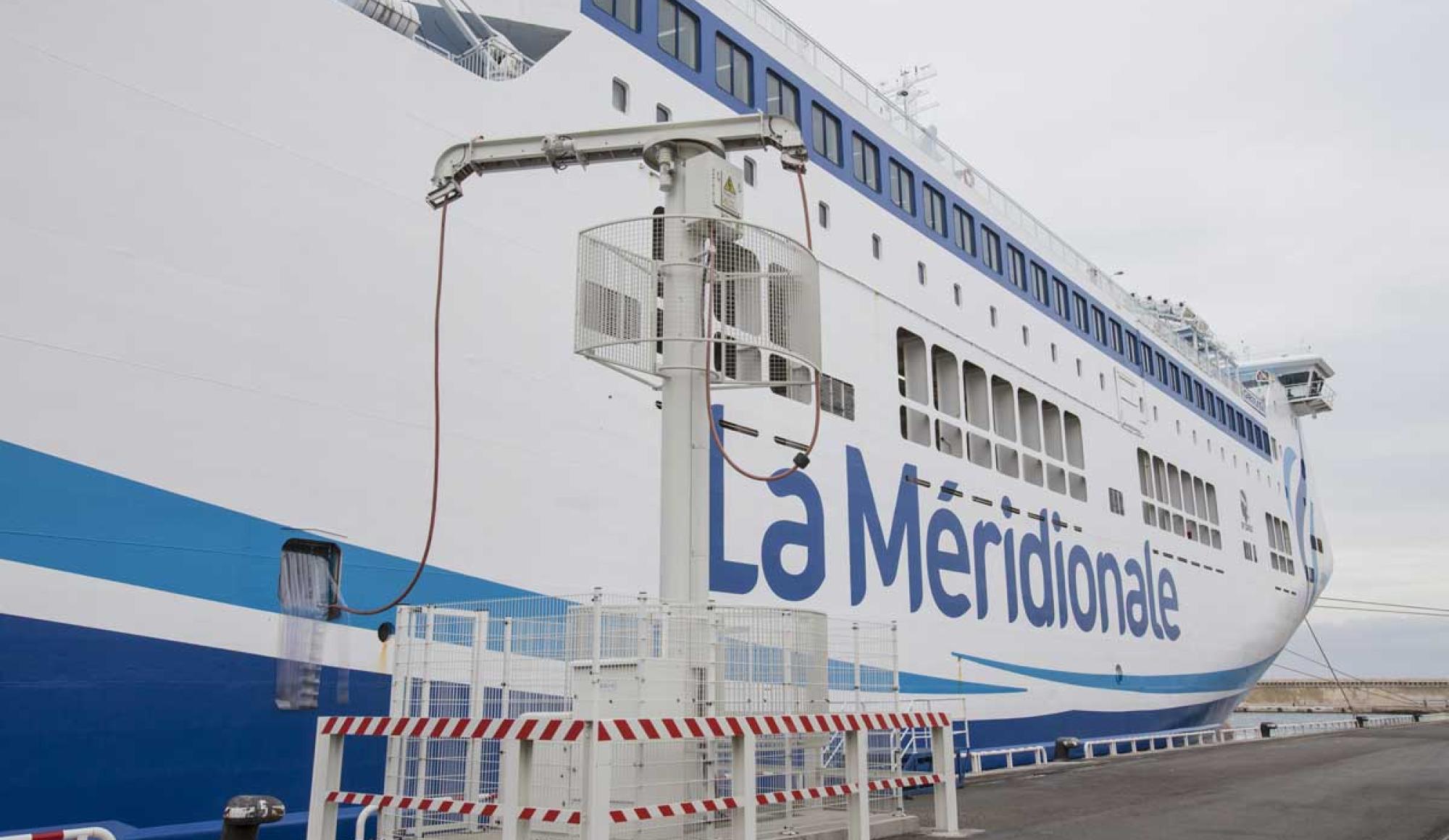
In order to eliminate these inconveniences and manage its activities in an eco-responsible way, La Méridionale has partnered with the Grand Port Maritime de Marseille (GPMM). The shipping company invested in the shore-to-ship power (SSP) solution for ships at berth back in 2016.
In 2017, it was the first and only shipping company in the Mediterranean to use the CENAQ solution for its ferries to Corsica.
How does the shore-to-ship power work for ferries at berth in Marseille?
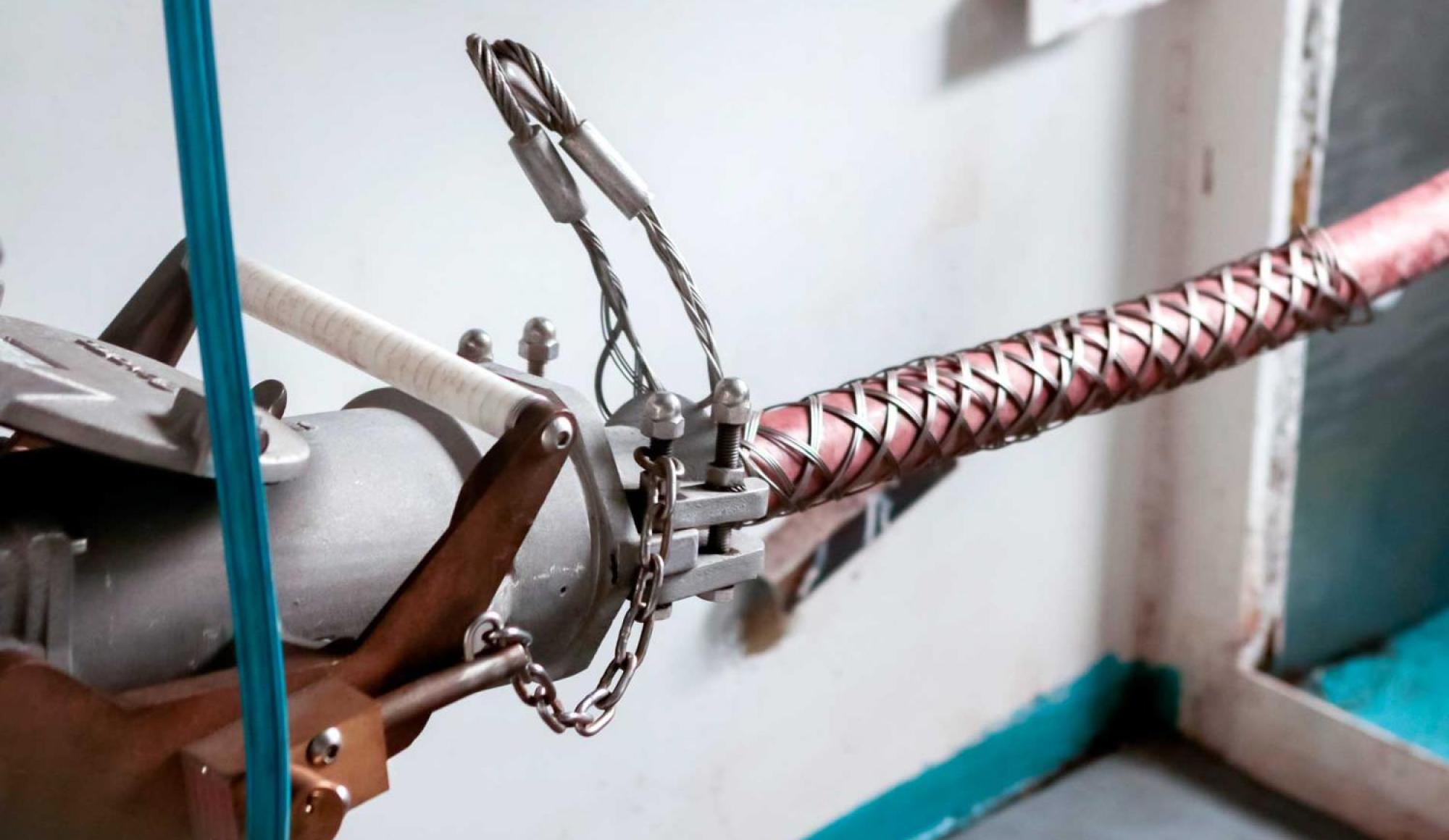
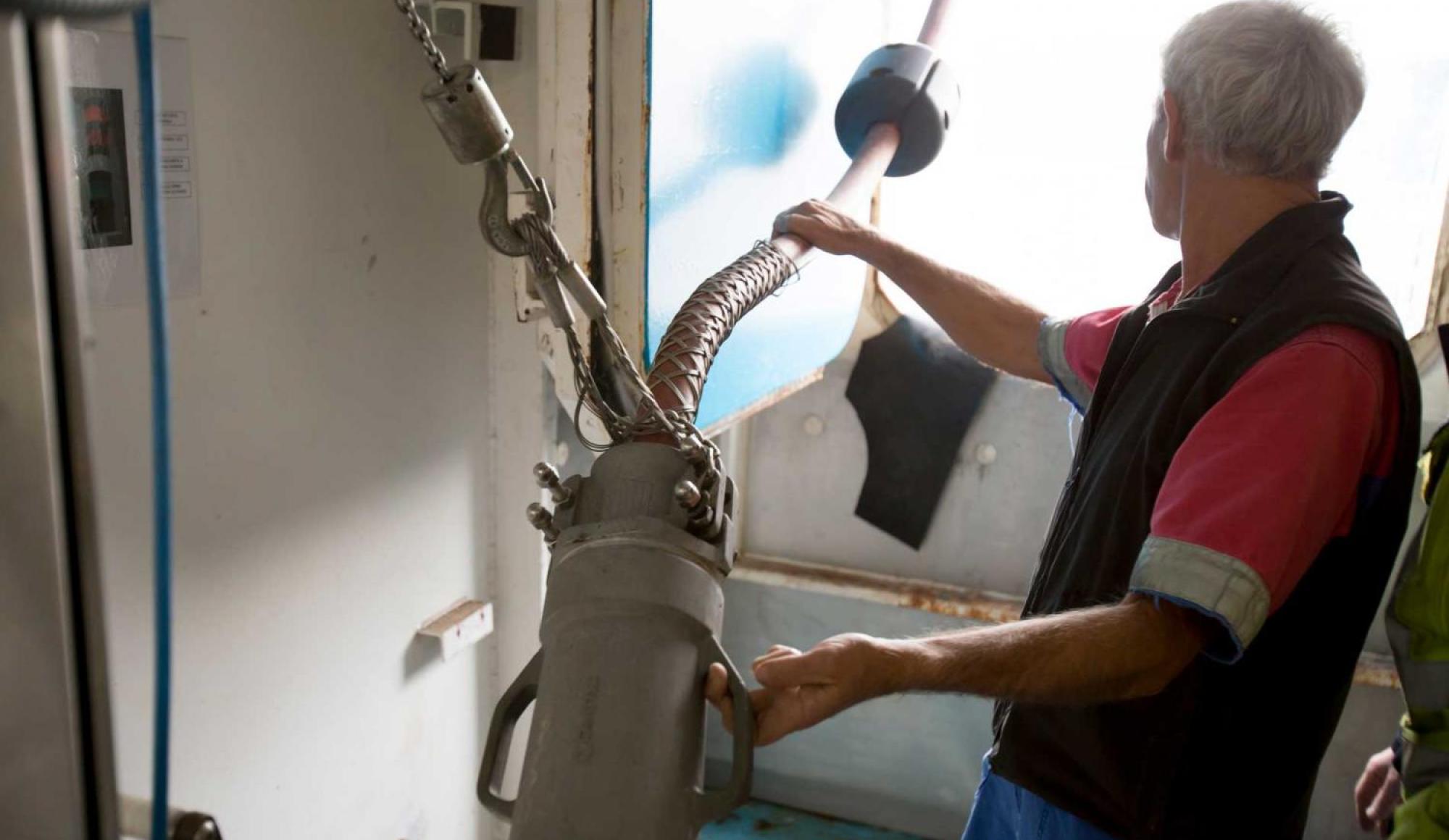
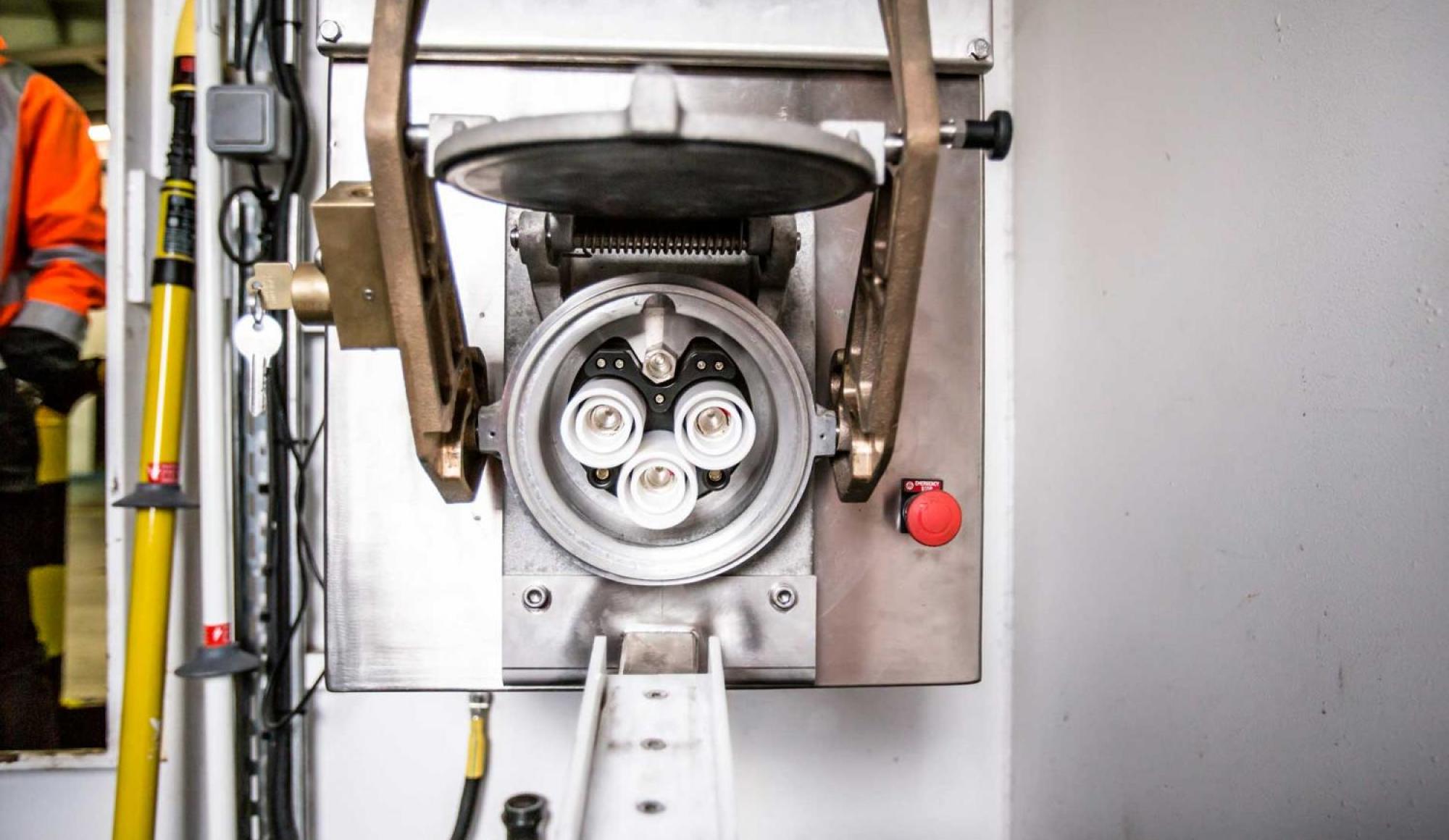
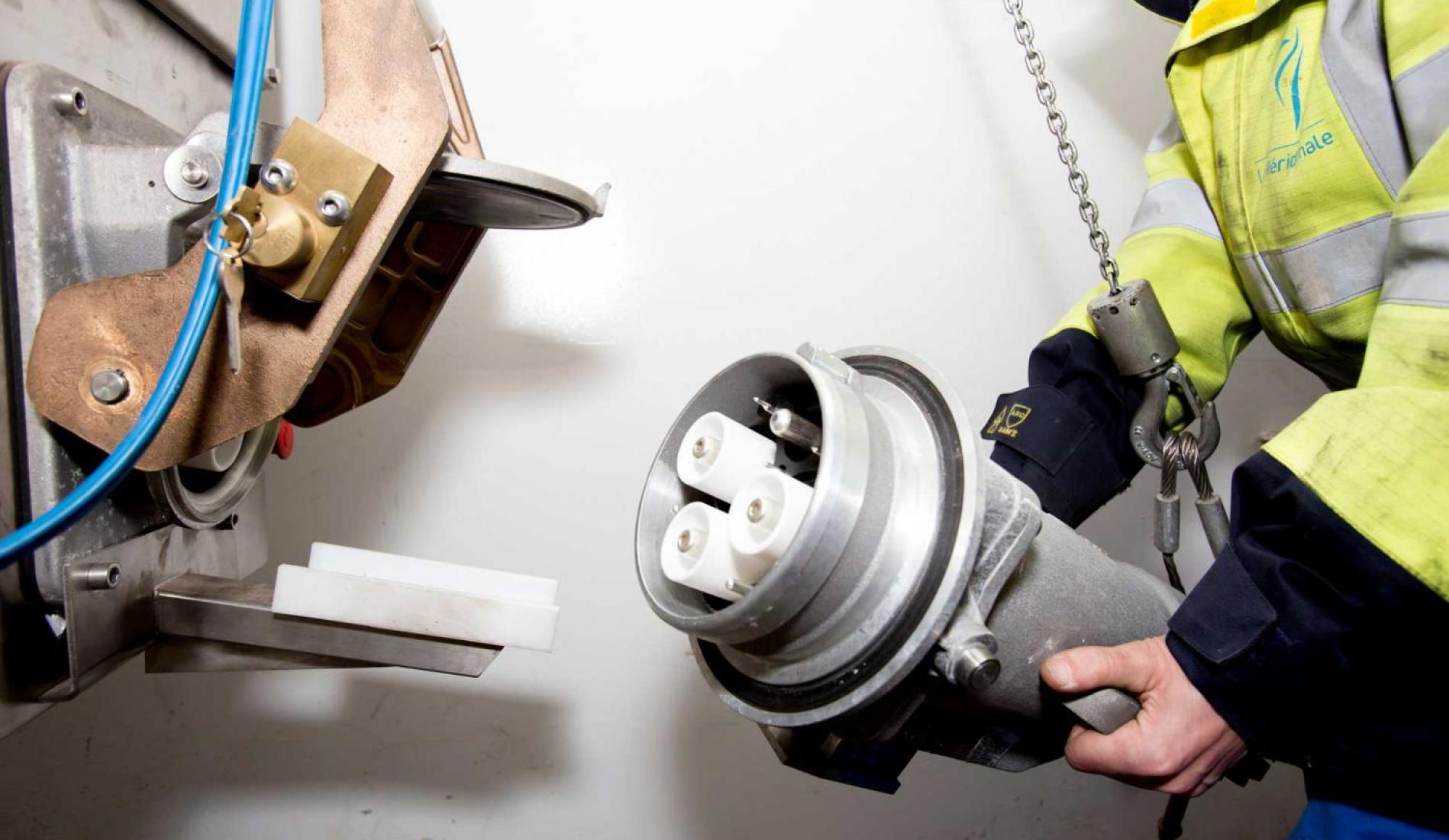
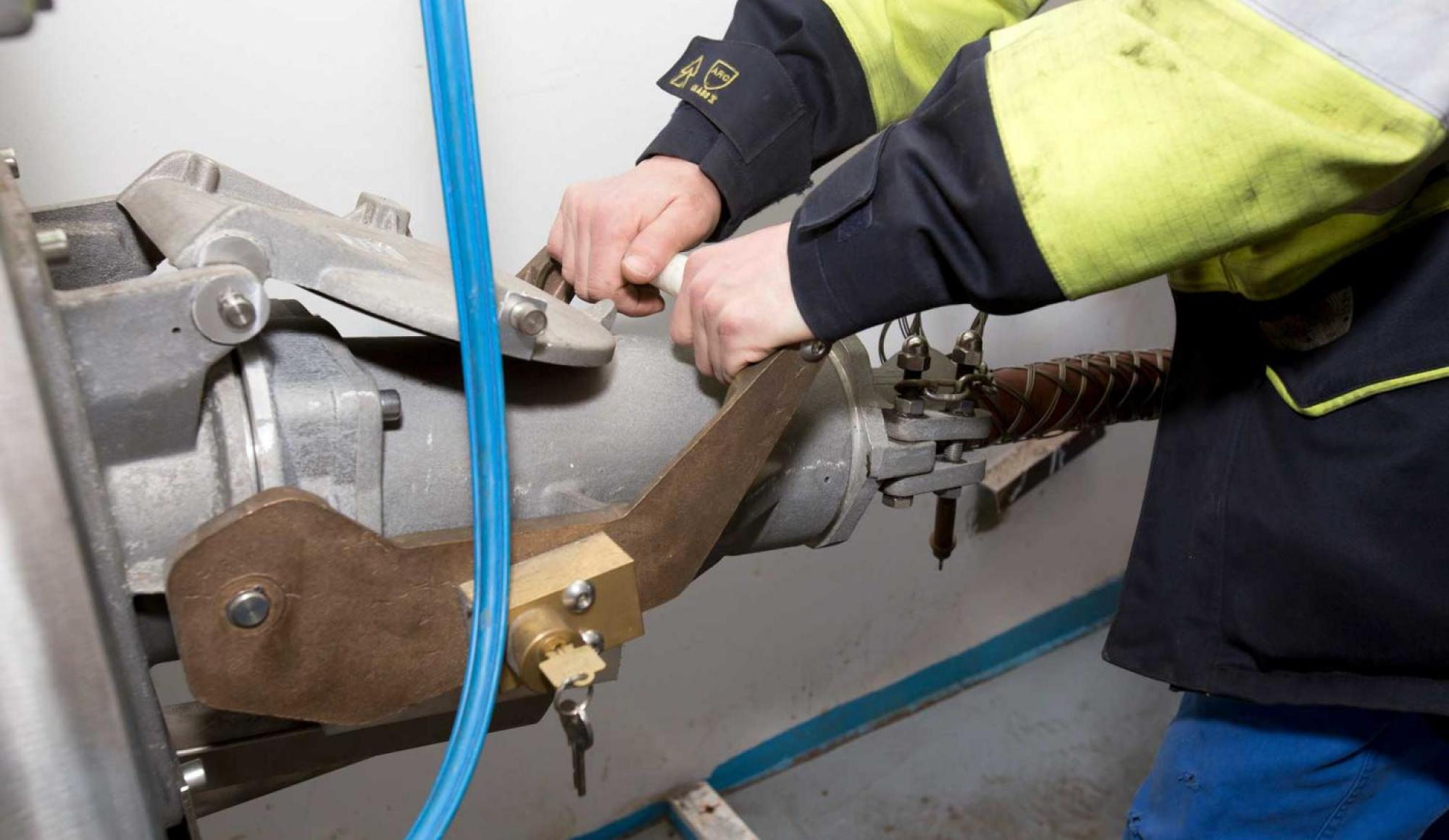
To enable ships to Corsica and to Morocco to use the shore-supplied power, a transformer converts shore-based electricity into usable current on-board. Although the technical implementation of the project brought about many challenges, quayside manoeuvring is simple.
When a ferry heading to Morocco or Corsica arrives in the port of Marseille, it is connected to the shore power grid by a remotely-guided arm located on the quay and by a connection panel, on-board the ship. Before leaving for Ajaccio, Tangier or Porto-Vecchio, the socket that links the berthed ship is disconnected and the boat recovers its energy autonomy.
SSP (CENAQ): a solution that eliminates polluting emissions
Since January 2017, our 3 ro-ro (aka ro-pax) ships (The Girolata, The Kalliste and The Piana) are supplied with electricity from the high-voltage grid, directly from the quay. For each of these 3 ferries to Corsica and Morocco, this eliminates the equivalent in particulate matter (PM10) and CO2 emissions of over 3,000 vehicles/day* and 65,000 other vehicles/day for nitrogen oxides (NOx) [source: AirPaca].
This eco-friendly solution also gets rid of noise and vibrations generated by engines. Shore-to-ship power improves on-board working conditions as well as environmental quality for port-side residents. And, last but not least, it also means lower fuel consumption and lower maintenance and servicing costs.
CENAQ thus represents a sustainable solution for the management of Mediterranean crossings carried out by our company.
(*) Vehicles making a round trip between Aix and Marseille (64 kms)
CENAQ: an ecological solution for Corsica
In the Corsican ports of Ajaccio and Porto-Vecchio where La Méridionale stops over, connection to the electricity grid is not possible for technical reasons. Rousset-based Air Flow company has therefore come up with an innovative solution based on liquid natural gas: "The LNG is transported and stored in refrigerated containers at -161 degrees, so that it retains its liquid form. Before being used, the gas is brought to room temperature by means of an atmospheric heater and then sent to the generator set, which burns it to produce electricity," explains Emilien Doye, Ship Electrification Project Manager at Air Flow.
The solution was tested for for 15 days in the port of Ajaccio in 2018: "This proven technology is used by many industries and subject to drastic safety regulations. It presents no danger to the environment or local residents. The test is carried out with the validation of all the competent safety bodies," emphasizes Christophe Seguinot, Technical Director of La Méridionale.
A safe, tailor-made solution

Stay in touch
Subscribe to our newsletter
You'll be the first to keep up with our latest mediterranean news and exclusive offers
Our destinations
Porto-Vecchio
Tangier
Marseille